Blab Entertainment
Alex Ross Perrys Videoheaven Explores the Rise and Fall of Video Rental Culture
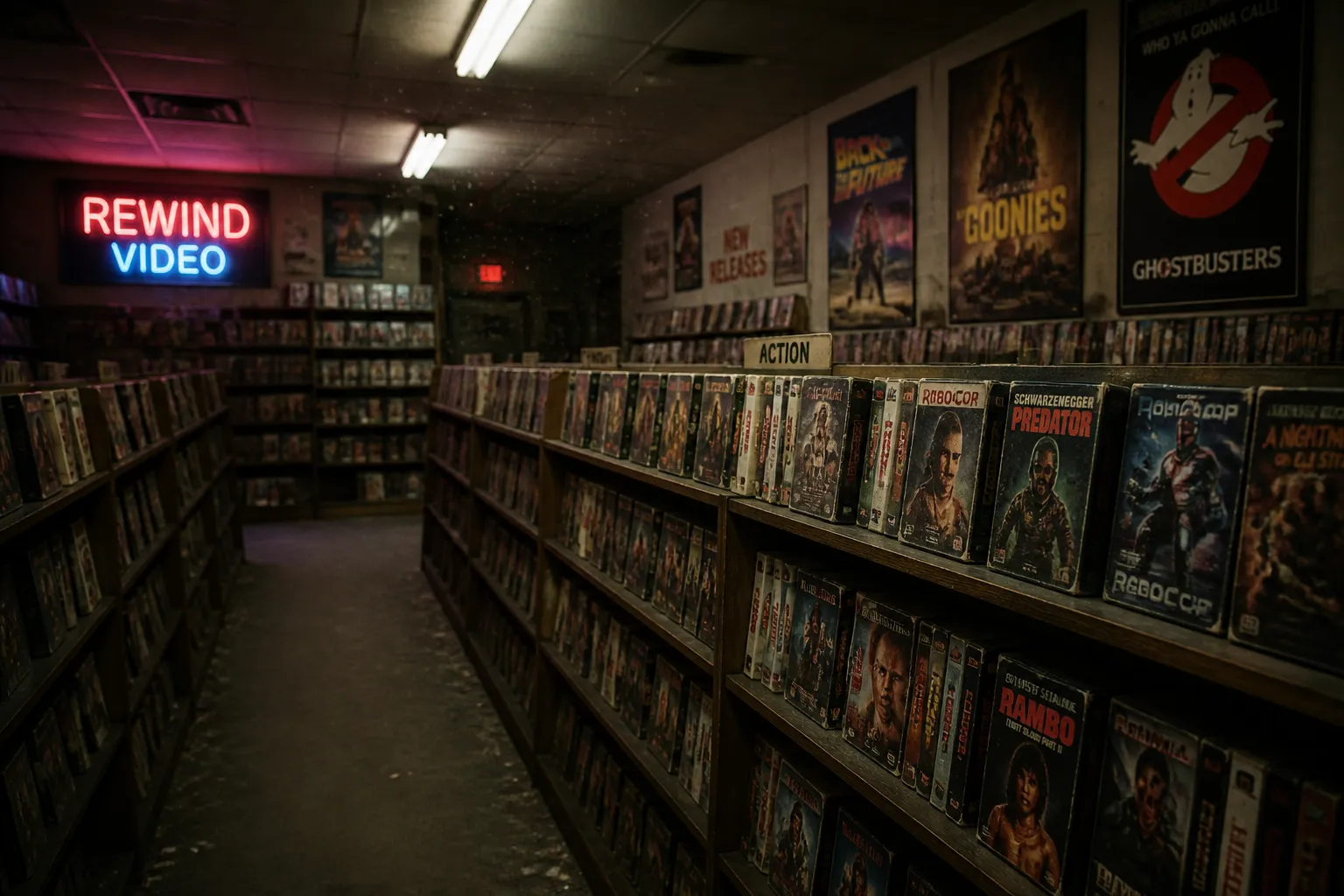
From the dusty aisles of a neighborhood video store to the glow of a streaming interface, Alex Ross Perry’s new documentary Videoheaven traces the arc of a once‑dominant industry. The nearly three‑hour essay premiered at the Rotterdam Film Festival and the Tribeca Film Festival in 2025, and it is now rolling out to select theaters in 2026.
Narrated by actress Maya Hawke, the film blends archival footage, contemporary interviews, and a curated montage of on‑screen scenes that capture video stores in popular culture. Perry stitches together VHS‑era home videos, behind‑the‑scenes clips, and a selection of iconic movie moments to create a layered portrait of a culture that once defined weekend leisure.
Perry, whose independent features Listen Up Philip (2014) and Her Smell (2018) earned him a reputation for thoughtful, character‑driven storytelling, draws heavily on Daniel Herbert’s 2014 book Videoland: Movie Culture at the American Video Store. Herbert’s scholarly work provides the documentary’s framework, framing the social and economic impact of video rental shops across the United States. The film is organized into distinct chapters that examine time‑shifting, home taping, the role of video store clerks, and the representation of adult video sections.
The editing was handled by Clyde Folley, whose experience with the Criterion Collection gives the montage a polished, archival feel. Folley and Perry previously collaborated on a feature‑length interview celebrating the fiftieth anniversary of VHS, which appeared in Criterion’s online magazine Current in March 2025.
Videoheaven pulls from a wide range of source material. Television shows such as Seinfeld, The Simpsons, King of the Hill, and True Blood, as well as films like Videodrome, Body Double, and The Watermelon Woman, are intercut with commentary that highlights how video stores have been portrayed on screen. The documentary also references the adult video section, citing the “privacy in public” dynamic and the cultural stigma associated with adult content.
The film pays tribute to the people who worked in video stores, noting that many filmmakers, including Quentin Tarantino and Kevin Smith, began their careers in such environments. Perry points out that actors who have played video store characters—Jeff Bridges, Jack Black, Matthew Lillard, and David Spade—have appeared in multiple projects that feature these settings.
One of the documentary’s key moments is a discussion of product placement, citing TriStar’s The Fisher King for its in‑store display of RCA/Columbia videotapes. Perry also references Troma’s self‑referential approach to video store imagery.
At the end of the film, a comprehensive list of all the movies used in the montage appears in the credits, offering viewers a guide for further exploration. Perry highlights several landmark titles that shaped video culture, including Videodrome, Body Double, Disconnected, The Watermelon Woman, Be Kind Rewind, and I Am Legend.
Critical reception has noted the documentary’s depth and its ability to serve both nostalgic audiences and younger cinephiles. Reviews from Spokane Public Radio, Bloody Disgusting, Paste Magazine, The New York Times, Slant Magazine, and the BFI have praised the film’s scholarly approach and its engaging narrative structure.
Videoheaven is distributed by an independent distributor and is expected to remain in limited theatrical release through the summer of 2026. The film’s release follows Perry’s earlier work and continues his exploration of film culture through an essay‑style documentary format.
The documentary arrives at a time when physical media continues to decline, with streaming services dominating home entertainment. By documenting the rise and fall of video rental stores, Videoheaven offers a historical perspective that contextualizes the current shift toward digital distribution.
As of now, no additional releases or festival screenings have been announced beyond the current theatrical run. The film’s availability on home media or streaming platforms has not yet been confirmed.
Narrated by actress Maya Hawke, the film blends archival footage, contemporary interviews, and a curated montage of on‑screen scenes that capture video stores in popular culture. Perry stitches together VHS‑era home videos, behind‑the‑scenes clips, and a selection of iconic movie moments to create a layered portrait of a culture that once defined weekend leisure.
Perry, whose independent features Listen Up Philip (2014) and Her Smell (2018) earned him a reputation for thoughtful, character‑driven storytelling, draws heavily on Daniel Herbert’s 2014 book Videoland: Movie Culture at the American Video Store. Herbert’s scholarly work provides the documentary’s framework, framing the social and economic impact of video rental shops across the United States. The film is organized into distinct chapters that examine time‑shifting, home taping, the role of video store clerks, and the representation of adult video sections.
The editing was handled by Clyde Folley, whose experience with the Criterion Collection gives the montage a polished, archival feel. Folley and Perry previously collaborated on a feature‑length interview celebrating the fiftieth anniversary of VHS, which appeared in Criterion’s online magazine Current in March 2025.
Videoheaven pulls from a wide range of source material. Television shows such as Seinfeld, The Simpsons, King of the Hill, and True Blood, as well as films like Videodrome, Body Double, and The Watermelon Woman, are intercut with commentary that highlights how video stores have been portrayed on screen. The documentary also references the adult video section, citing the “privacy in public” dynamic and the cultural stigma associated with adult content.
The film pays tribute to the people who worked in video stores, noting that many filmmakers, including Quentin Tarantino and Kevin Smith, began their careers in such environments. Perry points out that actors who have played video store characters—Jeff Bridges, Jack Black, Matthew Lillard, and David Spade—have appeared in multiple projects that feature these settings.
One of the documentary’s key moments is a discussion of product placement, citing TriStar’s The Fisher King for its in‑store display of RCA/Columbia videotapes. Perry also references Troma’s self‑referential approach to video store imagery.
At the end of the film, a comprehensive list of all the movies used in the montage appears in the credits, offering viewers a guide for further exploration. Perry highlights several landmark titles that shaped video culture, including Videodrome, Body Double, Disconnected, The Watermelon Woman, Be Kind Rewind, and I Am Legend.
Critical reception has noted the documentary’s depth and its ability to serve both nostalgic audiences and younger cinephiles. Reviews from Spokane Public Radio, Bloody Disgusting, Paste Magazine, The New York Times, Slant Magazine, and the BFI have praised the film’s scholarly approach and its engaging narrative structure.
Videoheaven is distributed by an independent distributor and is expected to remain in limited theatrical release through the summer of 2026. The film’s release follows Perry’s earlier work and continues his exploration of film culture through an essay‑style documentary format.
The documentary arrives at a time when physical media continues to decline, with streaming services dominating home entertainment. By documenting the rise and fall of video rental stores, Videoheaven offers a historical perspective that contextualizes the current shift toward digital distribution.
As of now, no additional releases or festival screenings have been announced beyond the current theatrical run. The film’s availability on home media or streaming platforms has not yet been confirmed.