Blab Entertainment
Dolbys Audio Innovations: From Cinema to Home - How Dolby Digital, Atmos, and Vision Shape Modern Sound
Imagine stepping into a theater where sound rises above you and colors dance on a laser‑lit screen. That experience is engineered by Dolby Laboratories, Inc., a company that has been a pillar of audio technology for more than sixty years. From noise‑reduction systems for recording studios to the immersive soundscapes that define modern cinema, Dolby’s portfolio now centers on three flagship products: Dolby Cinema, Dolby Atmos, and Dolby Digital.
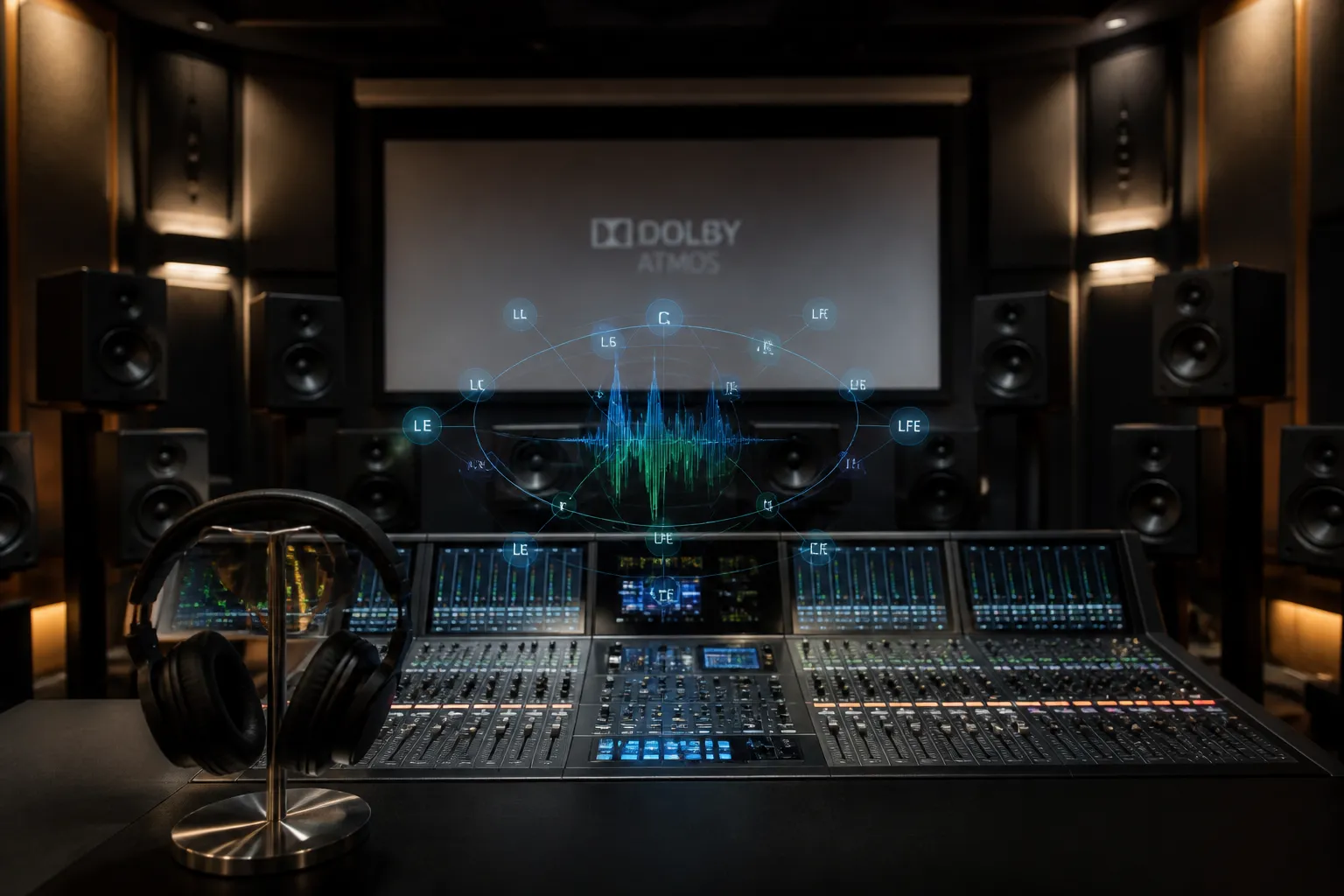
Dolby Cinema is the premium theatrical format that marries two proprietary Dolby technologies. Dolby Vision powers a dual‑4K laser projection system, delivering high‑dynamic‑range imagery that feels almost tangible. Dolby Atmos, an object‑based surround‑sound system, is woven into the same environment. In a Dolby‑certified venue, speakers sit along walls and on ceilings, creating a three‑dimensional soundstage that can place audio objects anywhere in space. The theater’s acoustics are engineered to support the Atmos mix, and the experience is further enhanced by reclining leather seats and other comfort features that set it apart from standard multiplexes.
The audio that reaches a Dolby Cinema audience is not stored in a consumer‑grade format. Instead, the film’s audio and video streams are packaged into a Digital Cinema Package (DCP). A DCP contains a composition playlist written in XML and a set of track files that hold the image (compressed with JPEG 2000) and audio (uncompressed 24‑bit linear PCM). The DCP is delivered to the cinema’s server, where it is decoded and played back in real time. Because the audio is uncompressed, Dolby Cinema can deliver the full fidelity of the original mix.
For home and portable playback, Dolby Digital—commonly known as AC‑3—remains the most ubiquitous format. Introduced in the early 1990s, Dolby Digital uses lossy compression based on the modified discrete cosine transform (MDCT). It can encode 2.0 stereo or 5.1 surround sound and is found on DVDs, Blu‑ray discs, streaming services, and game consoles. The format has evolved: Dolby Digital Plus (E‑AC‑3) can carry lossy Atmos metadata, while Dolby TrueHD provides lossless Atmos playback for UHD Blu‑ray discs. Atmos itself is an expansion of traditional surround sound. It adds height channels and allows sound designers to treat audio as movable objects rather than fixed speaker positions. In cinema, Atmos is implemented with ceiling‑mounted speakers; in consumer products, upward‑firing speakers or soundbars simulate overhead sound.
While Dolby Cinema offers the most immersive experience, it comes at a premium. Ticket prices for a Dolby Cinema screening are typically a few dollars higher than for a standard theater, reflecting the specialized projection system, the Atmos speaker array, and the upgraded seating. For viewers who cannot travel to a Dolby‑certified venue, the home‑theater market has adopted many Dolby technologies. A typical Dolby Atmos home setup includes a compatible AV receiver, a set of front, side, and rear speakers, and one or more height speakers or soundbars that reflect sound off the ceiling. The receiver receives a Dolby Digital Plus stream that contains the Atmos metadata and routes the audio to the appropriate speakers.
In summary, Dolby Laboratories has built a layered ecosystem: Dolby Cinema delivers the highest‑fidelity audio and visual experience in a professional theater setting; Dolby Digital and its successors provide compressed audio for mass distribution; Dolby Atmos extends spatial audio to both cinema and home; and Dolby Vision enhances image quality. Together, these technologies shape how audiences experience film and media across multiple platforms. The industry continues to evolve. New Dolby‑certified theaters are opening worldwide, and Dolby’s licensing agreements with streaming platforms expand the reach of Atmos and Vision. As home‑theater systems become more affordable, the line between cinema and home experiences is increasingly blurred, but the core technologies that Dolby pioneered remain central to the industry’s audio and visual standards.
Dolby Cinema is the premium theatrical format that marries two proprietary Dolby technologies. Dolby Vision powers a dual‑4K laser projection system, delivering high‑dynamic‑range imagery that feels almost tangible. Dolby Atmos, an object‑based surround‑sound system, is woven into the same environment. In a Dolby‑certified venue, speakers sit along walls and on ceilings, creating a three‑dimensional soundstage that can place audio objects anywhere in space. The theater’s acoustics are engineered to support the Atmos mix, and the experience is further enhanced by reclining leather seats and other comfort features that set it apart from standard multiplexes.
The audio that reaches a Dolby Cinema audience is not stored in a consumer‑grade format. Instead, the film’s audio and video streams are packaged into a Digital Cinema Package (DCP). A DCP contains a composition playlist written in XML and a set of track files that hold the image (compressed with JPEG 2000) and audio (uncompressed 24‑bit linear PCM). The DCP is delivered to the cinema’s server, where it is decoded and played back in real time. Because the audio is uncompressed, Dolby Cinema can deliver the full fidelity of the original mix.
For home and portable playback, Dolby Digital—commonly known as AC‑3—remains the most ubiquitous format. Introduced in the early 1990s, Dolby Digital uses lossy compression based on the modified discrete cosine transform (MDCT). It can encode 2.0 stereo or 5.1 surround sound and is found on DVDs, Blu‑ray discs, streaming services, and game consoles. The format has evolved: Dolby Digital Plus (E‑AC‑3) can carry lossy Atmos metadata, while Dolby TrueHD provides lossless Atmos playback for UHD Blu‑ray discs. Atmos itself is an expansion of traditional surround sound. It adds height channels and allows sound designers to treat audio as movable objects rather than fixed speaker positions. In cinema, Atmos is implemented with ceiling‑mounted speakers; in consumer products, upward‑firing speakers or soundbars simulate overhead sound.
While Dolby Cinema offers the most immersive experience, it comes at a premium. Ticket prices for a Dolby Cinema screening are typically a few dollars higher than for a standard theater, reflecting the specialized projection system, the Atmos speaker array, and the upgraded seating. For viewers who cannot travel to a Dolby‑certified venue, the home‑theater market has adopted many Dolby technologies. A typical Dolby Atmos home setup includes a compatible AV receiver, a set of front, side, and rear speakers, and one or more height speakers or soundbars that reflect sound off the ceiling. The receiver receives a Dolby Digital Plus stream that contains the Atmos metadata and routes the audio to the appropriate speakers.
In summary, Dolby Laboratories has built a layered ecosystem: Dolby Cinema delivers the highest‑fidelity audio and visual experience in a professional theater setting; Dolby Digital and its successors provide compressed audio for mass distribution; Dolby Atmos extends spatial audio to both cinema and home; and Dolby Vision enhances image quality. Together, these technologies shape how audiences experience film and media across multiple platforms. The industry continues to evolve. New Dolby‑certified theaters are opening worldwide, and Dolby’s licensing agreements with streaming platforms expand the reach of Atmos and Vision. As home‑theater systems become more affordable, the line between cinema and home experiences is increasingly blurred, but the core technologies that Dolby pioneered remain central to the industry’s audio and visual standards.