Blab Entertainment
Netflixs The Dinosaurs Uses VFX to Make Millions of Years Visible
When The Dinosaurs hit Netflix on March 6 2026, it immediately turned heads for turning the planet itself into a storyteller. The four‑part documentary, produced by Silverback Films in partnership with Amblin Entertainment and narrated by Morgan Freeman, traces the rise and fall of dinosaurs from the Triassic to the Cretaceous–Paleogene extinction. What sets the series apart is a series of sweeping visual‑effects transitions crafted by Lux Aeterna that glide viewers across continents, coastlines and climates before the narrative returns to the creatures.
Natural‑history filmmakers have long wrestled with the challenge of keeping audiences oriented over spans of millions of years. Showrunner Dan Tapster of Silverback Films explained that the series had to “convey what had changed and why it mattered” without relying solely on narration. The answer was to let the planet itself act as a visual narrator. Lux Aeterna delivered 62 shots that begin in orbit, reveal continental shapes, and then descend into the surface as forests grow, volcanoes erupt and coastlines shift.
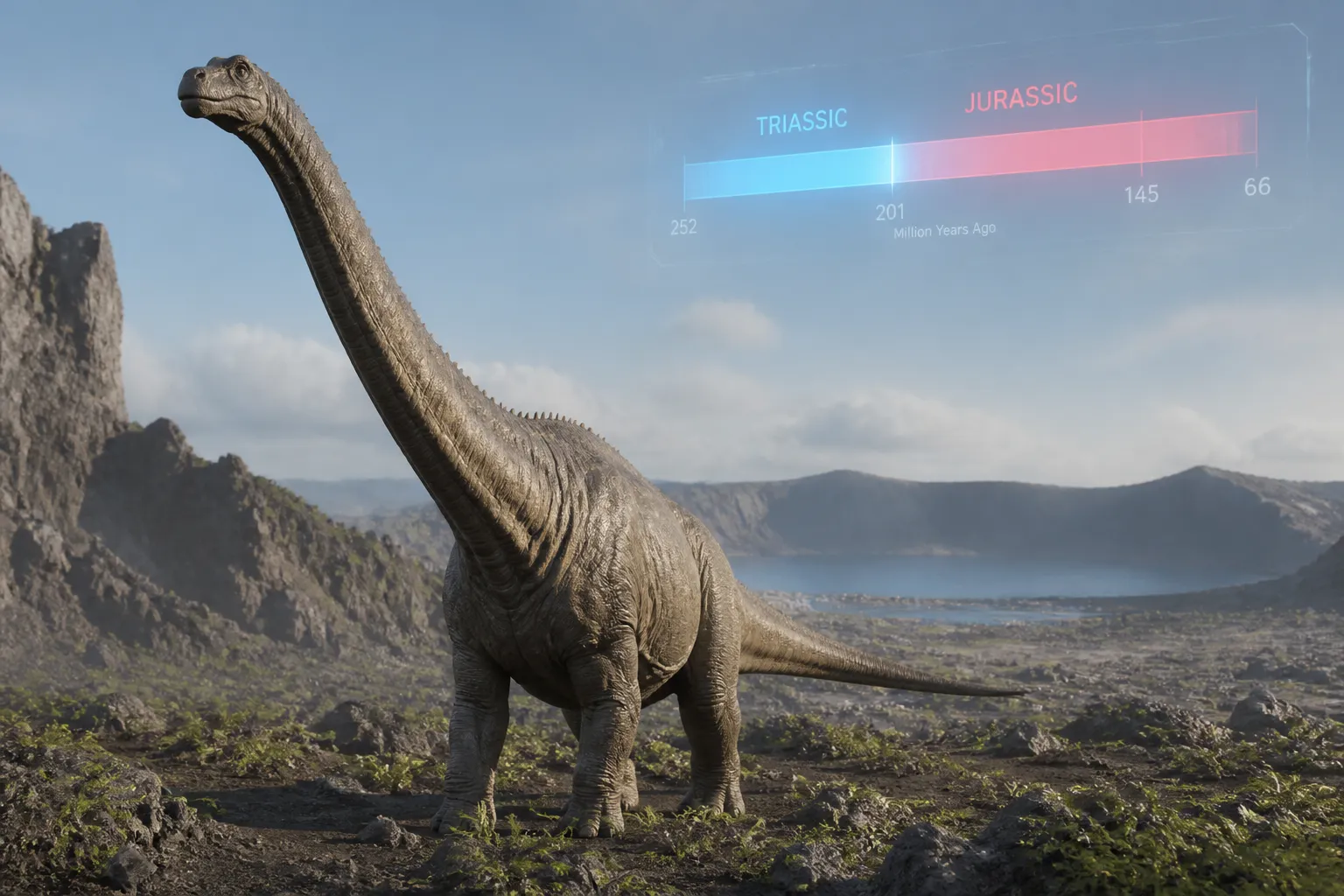
These planetary transitions serve a practical storytelling purpose. Rather than cutting abruptly between eras, the camera travels across the world, giving viewers a moment to recalibrate before the next ecosystem is introduced. The effect is subtle but essential; it keeps the audience oriented as the series jumps from the Triassic to the Jurassic and finally to the Cretaceous.
Collaboration between the filmmakers and VFX artists began early in production. Tapster noted that Lux Aeterna “understood the ambition for the series to feel cinematic” and was able to translate an information‑led brief into engaging shots. The planetary sequences were designed to flow seamlessly into the creature animation produced by Industrial Light & Magic, a continuity that preserved the illusion of a single cinematic world.
Lux Aeterna’s approach relied on high‑resolution geological data and satellite imagery. Senior CGI artist Paul Greer explained that more than half of the shots dealt with time travel, using techniques such as spinning star fields, landscape morphing and low‑Earth‑orbit satellite‑style shots to show continents physically moving as the camera dives millions of years into the past. The result is a visual experience that feels closer to feature‑film world‑building than traditional documentary illustration.
The series was executive‑produced by Steven Spielberg, whose involvement brings a level of production value that is more common in scripted features than in natural‑history documentaries. Spielberg’s Amblin Entertainment worked closely with Silverback Films, and the partnership helped secure the resources needed for the ambitious VFX work.
By turning geological change into cinematic storytelling, The Dinosaurs pushes natural‑history filmmaking toward a visual language that is often associated with feature cinema. The planetary transitions, while quiet beneath the narrative, provide the structural framework that allows the series to move confidently across millions of years of planetary history.
The series is part of a broader trend in which streaming platforms invest in high‑budget nature documentaries. The Dinosaurs follows 2023’s Life on Our Planet, another Amblin‑Silverback collaboration narrated by Freeman. Both series aim to combine scientific accuracy with cinematic presentation, a strategy that has attracted a wide audience and critical attention.
As of now, The Dinosaurs remains available on Netflix worldwide. The series has not yet been announced for additional seasons, and no further releases are scheduled. Viewers can expect the four episodes to continue exploring the evolutionary history of dinosaurs, with the VFX transitions remaining a standout feature of the production.
The project demonstrates how advanced visual effects can help audiences understand deep time, a concept that has long challenged natural‑history filmmakers. By integrating planetary transformations into the narrative flow, The Dinosaurs offers a new model for presenting complex geological and evolutionary information in an engaging, visually coherent format.
Natural‑history filmmakers have long wrestled with the challenge of keeping audiences oriented over spans of millions of years. Showrunner Dan Tapster of Silverback Films explained that the series had to “convey what had changed and why it mattered” without relying solely on narration. The answer was to let the planet itself act as a visual narrator. Lux Aeterna delivered 62 shots that begin in orbit, reveal continental shapes, and then descend into the surface as forests grow, volcanoes erupt and coastlines shift.
These planetary transitions serve a practical storytelling purpose. Rather than cutting abruptly between eras, the camera travels across the world, giving viewers a moment to recalibrate before the next ecosystem is introduced. The effect is subtle but essential; it keeps the audience oriented as the series jumps from the Triassic to the Jurassic and finally to the Cretaceous.
Collaboration between the filmmakers and VFX artists began early in production. Tapster noted that Lux Aeterna “understood the ambition for the series to feel cinematic” and was able to translate an information‑led brief into engaging shots. The planetary sequences were designed to flow seamlessly into the creature animation produced by Industrial Light & Magic, a continuity that preserved the illusion of a single cinematic world.
Lux Aeterna’s approach relied on high‑resolution geological data and satellite imagery. Senior CGI artist Paul Greer explained that more than half of the shots dealt with time travel, using techniques such as spinning star fields, landscape morphing and low‑Earth‑orbit satellite‑style shots to show continents physically moving as the camera dives millions of years into the past. The result is a visual experience that feels closer to feature‑film world‑building than traditional documentary illustration.
The series was executive‑produced by Steven Spielberg, whose involvement brings a level of production value that is more common in scripted features than in natural‑history documentaries. Spielberg’s Amblin Entertainment worked closely with Silverback Films, and the partnership helped secure the resources needed for the ambitious VFX work.
By turning geological change into cinematic storytelling, The Dinosaurs pushes natural‑history filmmaking toward a visual language that is often associated with feature cinema. The planetary transitions, while quiet beneath the narrative, provide the structural framework that allows the series to move confidently across millions of years of planetary history.
The series is part of a broader trend in which streaming platforms invest in high‑budget nature documentaries. The Dinosaurs follows 2023’s Life on Our Planet, another Amblin‑Silverback collaboration narrated by Freeman. Both series aim to combine scientific accuracy with cinematic presentation, a strategy that has attracted a wide audience and critical attention.
As of now, The Dinosaurs remains available on Netflix worldwide. The series has not yet been announced for additional seasons, and no further releases are scheduled. Viewers can expect the four episodes to continue exploring the evolutionary history of dinosaurs, with the VFX transitions remaining a standout feature of the production.
The project demonstrates how advanced visual effects can help audiences understand deep time, a concept that has long challenged natural‑history filmmakers. By integrating planetary transformations into the narrative flow, The Dinosaurs offers a new model for presenting complex geological and evolutionary information in an engaging, visually coherent format.