Blab Entertainment
Palestinian Voices and Cinema Take Center Stage at the 83rd Venice Film Festival
When the Lido’s glittering lagoon opened its gates on September 2, 2026, the 83rd Venice Film Festival transformed into a stage for Palestinian voices—both on screen and in the public square. Two feature-length works from the region, alongside a coordinated call to action, drew the festival’s attention to the ongoing conflict in Gaza.
Ahead of the opening day, the Venice4Palestine collective released an open letter signed by more than 200 artists and industry figures. The document urged festival organizers and the wider audiovisual community to take decisive steps in support of the Palestinian people. It marked the second consecutive year the group has pressed the same demand, keeping pressure on the festival to adopt a clearer stance.
The official selection carried that urgency. Ahmed Hassouna’s documentary Citizen Osama follows a photographer who juggles fatherhood and frontline reporting as he documents war‑torn Gaza. The film premiered out of competition on September 5. Muayad Alayan’s narrative feature Conversation With the Sea centers on Kamal, a 60‑year‑old Palestinian caught in a maze of Israeli bureaucracy after his son’s death in the Red Sea. Together, the two films placed Palestinian experiences at the heart of Venice’s cinematic conversation.
Public events mirrored the activism. Italian actress Greta Scarano, who launched the festival with the traditional lagoon swim, carried a watermelon‑shaped fan painted in the green, white, red, and black of the Palestinian flag—a symbol that has become a widely recognized emblem of solidarity online.
During the festival, American actor and filmmaker George Clooney addressed backlash against fellow actor Mark Ruffalo, who had criticized the proposed Paramount‑Warner Bros. Discovery merger and the Ellison family’s ties to Israel. Clooney said he supported Ruffalo’s right to speak freely, even when he disagreed, underscoring the importance of free expression.
Oscar‑winning actress Susan Sarandon spoke publicly about the professional consequences of her pro‑Palestinian activism. She said she continues to lose film roles because of her outspoken support, noting that parts of the industry still avoid hiring her because of her activism.
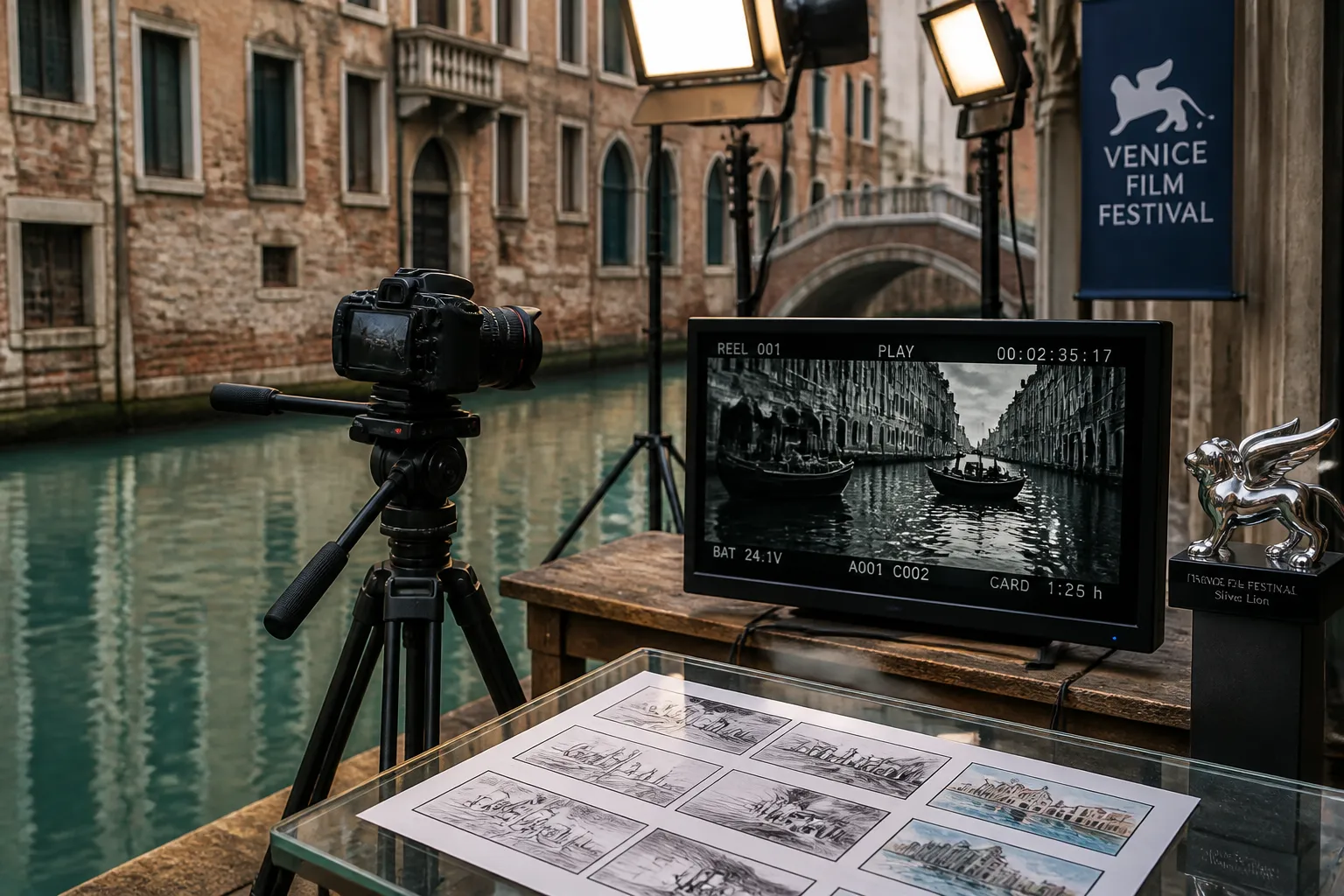
The festival’s official programme was announced on July 23, with the full line‑up revealed a week later. As part of the Venice Biennale, the 83rd edition remains one of the world’s oldest film festivals, attracting a wide range of international filmmakers and actors and serving as a launchpad for many films seeking awards‑season recognition.
The main competition jury’s press conference was cancelled before the opening week and rescheduled to September 2, the first day of the festival. The decision followed highly charged press conferences at the 76th Berlin International Film Festival, where jurors and talent were repeatedly asked about global politics, especially the Gaza war.
In addition to the Palestinian titles, the official selection included other international works. The Golden Lion for Lifetime Achievement was awarded to American actress Ellen Burstyn and actor‑filmmaker George Clooney. Danny Boyle’s biographical drama Ink opened the festival, while Giovanni Veronesi’s period drama God Laughs closed it.
The Venice4Palestine collective’s open letter and the inclusion of Palestinian films underscore the festival’s role as a platform for cultural discourse about the Gaza conflict. The festival’s response to the letter, public statements by industry figures, and symbolic gestures on the red carpet illustrate how film festivals can become arenas for political and humanitarian advocacy.
The 83rd Venice International Film Festival continues to attract global attention, with its programming and public events reflecting broader conversations about politics, culture, and the role of cinema in society. The Palestinian presence in the official selection and the coordinated activism by filmmakers and actors highlight the ongoing intersection of art and advocacy in the contemporary film landscape.
Ahead of the opening day, the Venice4Palestine collective released an open letter signed by more than 200 artists and industry figures. The document urged festival organizers and the wider audiovisual community to take decisive steps in support of the Palestinian people. It marked the second consecutive year the group has pressed the same demand, keeping pressure on the festival to adopt a clearer stance.
The official selection carried that urgency. Ahmed Hassouna’s documentary Citizen Osama follows a photographer who juggles fatherhood and frontline reporting as he documents war‑torn Gaza. The film premiered out of competition on September 5. Muayad Alayan’s narrative feature Conversation With the Sea centers on Kamal, a 60‑year‑old Palestinian caught in a maze of Israeli bureaucracy after his son’s death in the Red Sea. Together, the two films placed Palestinian experiences at the heart of Venice’s cinematic conversation.
Public events mirrored the activism. Italian actress Greta Scarano, who launched the festival with the traditional lagoon swim, carried a watermelon‑shaped fan painted in the green, white, red, and black of the Palestinian flag—a symbol that has become a widely recognized emblem of solidarity online.
During the festival, American actor and filmmaker George Clooney addressed backlash against fellow actor Mark Ruffalo, who had criticized the proposed Paramount‑Warner Bros. Discovery merger and the Ellison family’s ties to Israel. Clooney said he supported Ruffalo’s right to speak freely, even when he disagreed, underscoring the importance of free expression.
Oscar‑winning actress Susan Sarandon spoke publicly about the professional consequences of her pro‑Palestinian activism. She said she continues to lose film roles because of her outspoken support, noting that parts of the industry still avoid hiring her because of her activism.
The festival’s official programme was announced on July 23, with the full line‑up revealed a week later. As part of the Venice Biennale, the 83rd edition remains one of the world’s oldest film festivals, attracting a wide range of international filmmakers and actors and serving as a launchpad for many films seeking awards‑season recognition.
The main competition jury’s press conference was cancelled before the opening week and rescheduled to September 2, the first day of the festival. The decision followed highly charged press conferences at the 76th Berlin International Film Festival, where jurors and talent were repeatedly asked about global politics, especially the Gaza war.
In addition to the Palestinian titles, the official selection included other international works. The Golden Lion for Lifetime Achievement was awarded to American actress Ellen Burstyn and actor‑filmmaker George Clooney. Danny Boyle’s biographical drama Ink opened the festival, while Giovanni Veronesi’s period drama God Laughs closed it.
The Venice4Palestine collective’s open letter and the inclusion of Palestinian films underscore the festival’s role as a platform for cultural discourse about the Gaza conflict. The festival’s response to the letter, public statements by industry figures, and symbolic gestures on the red carpet illustrate how film festivals can become arenas for political and humanitarian advocacy.
The 83rd Venice International Film Festival continues to attract global attention, with its programming and public events reflecting broader conversations about politics, culture, and the role of cinema in society. The Palestinian presence in the official selection and the coordinated activism by filmmakers and actors highlight the ongoing intersection of art and advocacy in the contemporary film landscape.