Blab Entertainment
Battle Beyond the Stars (1980): The Low-Budget Sci-Fi Film That Launched James Camerons Legendary Career
When a modest $2 million production launched a career that would reshape Hollywood, the 1980 release of Battle Beyond the Stars proved that ambition can outshine a shoestring budget.
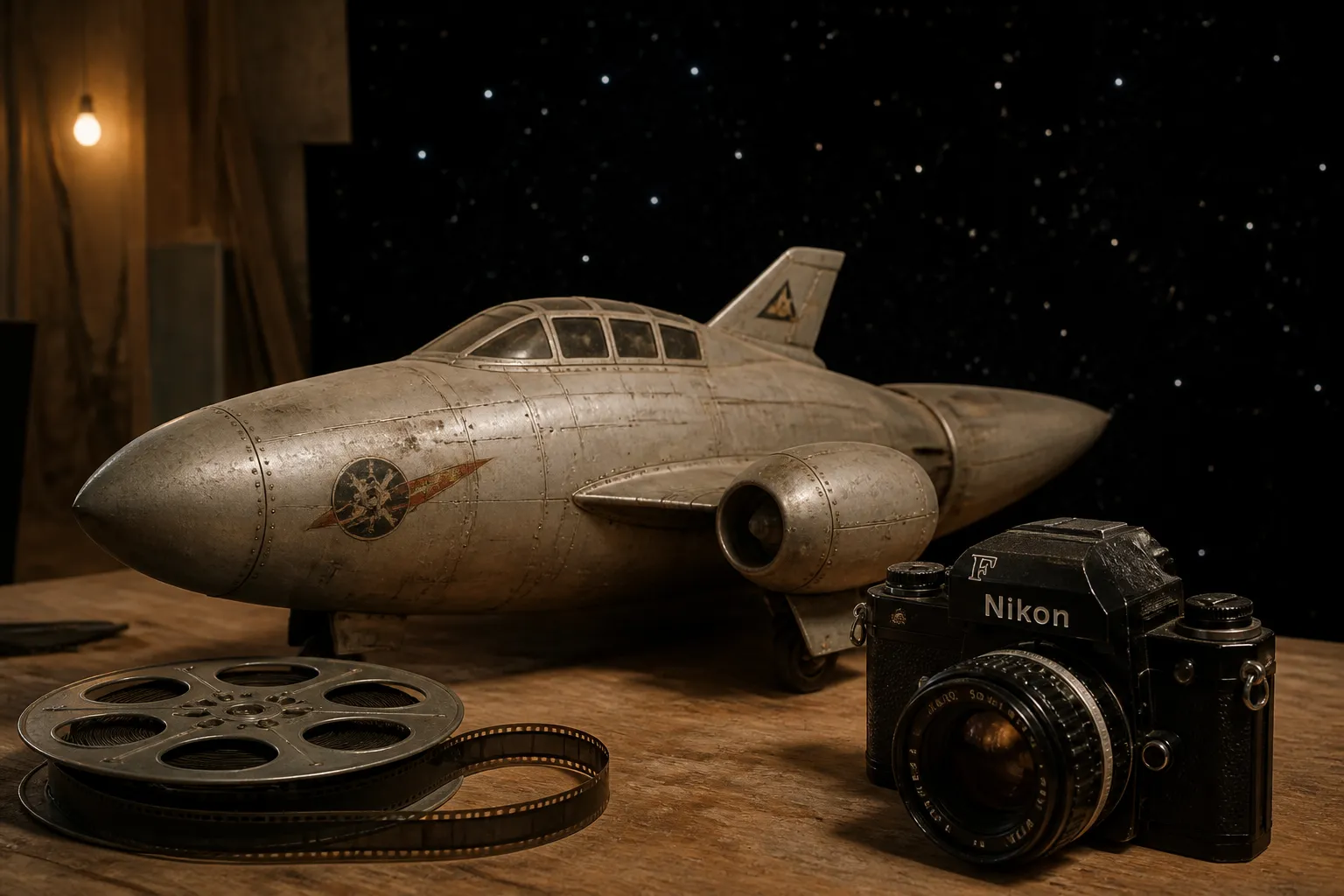
The July 25, 1980 film is a space‑opera retelling of the 1960 Western The Magnificent Seven, directed by Jimmy T. Murakami and produced under Roger Corman’s New World Pictures banner. The story follows a rag‑tag band of mercenaries who defend a distant colony from an alien threat, mirroring the Western’s frontier showdown in a star‑lit backdrop. Central to the plot is the Nestor, a hive‑mind entity that commands a legion of white‑cloaked bodies.
Casting was a star‑struck ensemble: Richard Thomas, Robert Vaughn, George Peppard, John Saxon, Sybil Danning, Darlanne Fluegel, Sam Jaffe, Jeff Corey, Morgan Woodward, Earl Boen, and Lynn Carlin. While the actors delivered colorful performances, the film’s low‑budget reality was visible in sets and practical effects.
It was on the set of Battle Beyond the Stars that a then‑unknown filmmaker, James Cameron, honed the practical techniques that would later define his career. Production notes reveal Cameron’s hands‑on approach: he repurposed spray‑painted McDonald’s boxes and egg cartons to create the movie’s visual effects. This resourceful method let him experiment with motion‑picture craft on a scale that matched the film’s space‑opera ambitions.
The score, composed by James Horner, blended choral and electronic elements. Horner’s work here foreshadowed his future collaborations with Cameron on Aliens, Titanic, and Avatar. The music’s hybrid texture would become a hallmark of Cameron’s later blockbusters.
Critical reception was mixed. Reviewers praised the film’s bold narrative and vibrant characters but noted the seams of its limited budget. Still, the movie performed reasonably well for a New World Pictures release, earning nominations for five Saturn Awards, including Best Science Fiction Film and Best Special Effects. Sybil Danning received a special award for Outstanding Achievement.
Beyond box‑office numbers, Battle Beyond the Stars was a launchpad for Cameron. Working on the set provided him with industry contacts—most notably Gale Anne Hurd, who would later produce The Terminator (1984), and James Horner, whose scores would accompany several of Cameron’s high‑profile films. Cameron’s experience refining practical effects on this low‑budget project directly informed the practical‑effects‑heavy design of The Terminator.
The film also stands as a historical marker for low‑budget science‑fiction filmmakers who sought to emulate the spectacle of Star Wars while drawing on classic Western narratives. This hybrid approach influenced subsequent space‑opera projects and contributed to the broader evolution of the genre.
Today, scholars study Battle Beyond the Stars as a touchstone for early Hollywood careers and the development of 1980s science‑fiction cinema. Its release coincided with a surge in genre experimentation, and its impact can be traced to the diverse slate of science‑fiction releases in 2026, from Project Hail Mary to Dune: Part Three and the animated Hoppers.
In summary, Battle Beyond the Stars remains a low‑budget 1980 science‑fiction film that blended Western tropes with space‑opera ambition. Its production gave James Cameron practical experience and key industry connections, setting the stage for his later successes. The film’s modest budget, inventive effects, and genre‑blending continue to be studied as part of the history of science‑fiction cinema.
The July 25, 1980 film is a space‑opera retelling of the 1960 Western The Magnificent Seven, directed by Jimmy T. Murakami and produced under Roger Corman’s New World Pictures banner. The story follows a rag‑tag band of mercenaries who defend a distant colony from an alien threat, mirroring the Western’s frontier showdown in a star‑lit backdrop. Central to the plot is the Nestor, a hive‑mind entity that commands a legion of white‑cloaked bodies.
Casting was a star‑struck ensemble: Richard Thomas, Robert Vaughn, George Peppard, John Saxon, Sybil Danning, Darlanne Fluegel, Sam Jaffe, Jeff Corey, Morgan Woodward, Earl Boen, and Lynn Carlin. While the actors delivered colorful performances, the film’s low‑budget reality was visible in sets and practical effects.
It was on the set of Battle Beyond the Stars that a then‑unknown filmmaker, James Cameron, honed the practical techniques that would later define his career. Production notes reveal Cameron’s hands‑on approach: he repurposed spray‑painted McDonald’s boxes and egg cartons to create the movie’s visual effects. This resourceful method let him experiment with motion‑picture craft on a scale that matched the film’s space‑opera ambitions.
The score, composed by James Horner, blended choral and electronic elements. Horner’s work here foreshadowed his future collaborations with Cameron on Aliens, Titanic, and Avatar. The music’s hybrid texture would become a hallmark of Cameron’s later blockbusters.
Critical reception was mixed. Reviewers praised the film’s bold narrative and vibrant characters but noted the seams of its limited budget. Still, the movie performed reasonably well for a New World Pictures release, earning nominations for five Saturn Awards, including Best Science Fiction Film and Best Special Effects. Sybil Danning received a special award for Outstanding Achievement.
Beyond box‑office numbers, Battle Beyond the Stars was a launchpad for Cameron. Working on the set provided him with industry contacts—most notably Gale Anne Hurd, who would later produce The Terminator (1984), and James Horner, whose scores would accompany several of Cameron’s high‑profile films. Cameron’s experience refining practical effects on this low‑budget project directly informed the practical‑effects‑heavy design of The Terminator.
The film also stands as a historical marker for low‑budget science‑fiction filmmakers who sought to emulate the spectacle of Star Wars while drawing on classic Western narratives. This hybrid approach influenced subsequent space‑opera projects and contributed to the broader evolution of the genre.
Today, scholars study Battle Beyond the Stars as a touchstone for early Hollywood careers and the development of 1980s science‑fiction cinema. Its release coincided with a surge in genre experimentation, and its impact can be traced to the diverse slate of science‑fiction releases in 2026, from Project Hail Mary to Dune: Part Three and the animated Hoppers.
In summary, Battle Beyond the Stars remains a low‑budget 1980 science‑fiction film that blended Western tropes with space‑opera ambition. Its production gave James Cameron practical experience and key industry connections, setting the stage for his later successes. The film’s modest budget, inventive effects, and genre‑blending continue to be studied as part of the history of science‑fiction cinema.