Blab Entertainment
Indie Horror Film 'The Cuckoo Clock' Unveils Trailer Ahead of October Release
On September 1, 2026, the official trailer for The Cuckoo Clock streamed to YouTube, announcing a limited U.S. theatrical opening on October 2, 2026 – just in time for the fall horror rush.
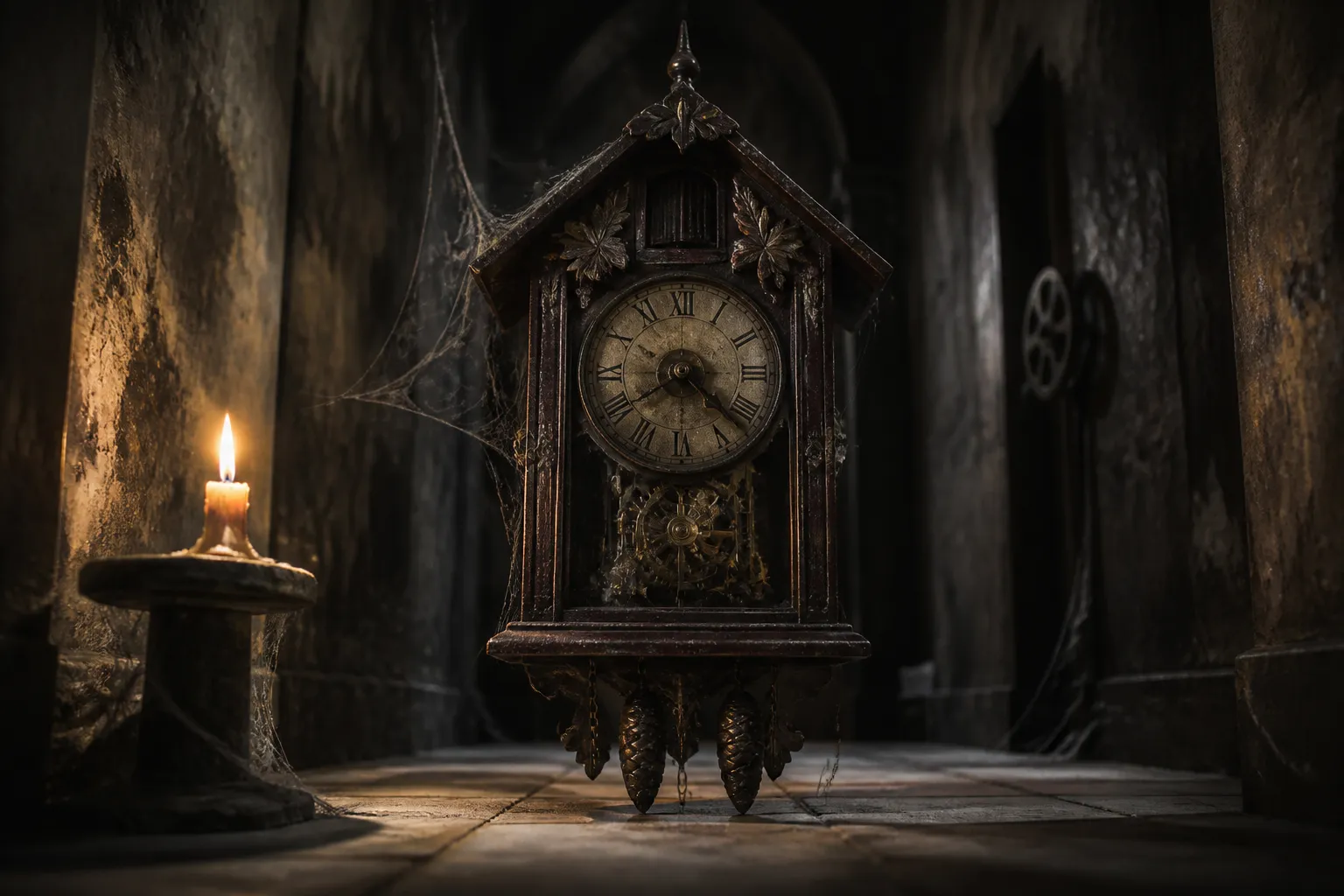
The trailer pulls viewers into a tense, intimate world where the ordinary becomes uncanny. Penny, a young woman who looks after her grandmother Adele, who suffers from dementia, finds herself drawn to Megan, the live‑in nurse who vanishes without a trace. With no one left to ask, Penny turns to a seemingly harmless cuckoo clock that begins to speak. The clock’s cryptic warnings point to Adele’s possible involvement, and as Penny’s grip on reality frays, the clock’s voice escalates into a crescendo of dread. The film’s visuals are described as dream‑logic and symbolic, a stylistic choice that promises to immerse audiences in Penny’s increasingly fragmented perspective. A striking moment comes when the clock’s animated cuckoo bird materializes in full scale, adding a surreal, almost theatrical element that heightens the sense of impending menace.
The project is the feature‑directorial debut of Lisa Jay, who has built a reputation on a string of short films that often blend surreal imagery with grounded storytelling. The Cuckoo Clock is written and directed by Jay, while producers Erich Cannon and Kim Hornsby helm the production under the banners of Compassionate Disaster Films and Paisley Hat Productions. Compassionate Disaster Films, based in Los Angeles, has a track record of producing feature and short films, as well as advertising content, and Paisley Hat Productions has similarly cultivated a portfolio of independent projects. The cast includes Hana Hahn, MaKenna DeCaro, and Laura Drake, all of whom bring experience from indie and television work. The trio’s performances aim to ground the film’s surreal elements in human emotion.
The film’s first public screening will take place at the 2026 Dead Prairies Horror Movie Festival in Canada on September 26. The festival, held at the SWT Lyceum Theatre in Gull Lake, is known for spotlighting niche horror titles and often serves as a springboard for independent films seeking wider distribution. Following the festival debut, the limited U.S. release on October 2 follows a common pattern for independent horror: generate word‑of‑mouth buzz through festival exposure before a focused, regional theatrical rollout.
In a market saturated with new horror releases, The Cuckoo Clock distinguishes itself with a premise that pivots around a mundane household object turned supernatural entity. The focus on a talking cuckoo clock offers a fresh twist compared to the genre’s usual haunted‑house or creature‑feature tropes. Moreover, the film’s emphasis on psychological disintegration and dream logic aligns with contemporary trends that explore mental states and unreliable perception, appealing to audiences who appreciate layered, mind‑bending narratives.
By weaving a domestic object into a vehicle for terror, The Cuckoo Clock taps into a growing appetite for horror that blurs the line between everyday life and supernatural dread. The film’s dream‑like pacing and unsettling imagery aim to keep viewers questioning what is real, a tactic that has proven effective in recent indie releases that prioritize atmosphere over jump scares.
At this time, no box‑office or streaming performance data is available. The distribution strategy suggests a modest, niche rollout aimed at horror aficionados who attend festivals and seek cult‑style experiences. The production companies have not announced any additional distribution partners or streaming releases, and no audience metrics have been reported, leaving the film’s commercial trajectory open for the coming weeks.
In sum, The Cuckoo Clock represents Lisa Jay’s first feature‑length effort, weaving romance, supernatural thriller, and psychological horror into a compact, unsettling package. The trailer, released on September 1, sets the stage for a September 26 festival premiere and an October 2 limited theatrical launch, while the production teams keep distribution details under wraps. Fans of indie horror can expect a film that turns the familiar into the uncanny, delivered through a dream‑like visual style that promises to keep viewers on edge.
The trailer pulls viewers into a tense, intimate world where the ordinary becomes uncanny. Penny, a young woman who looks after her grandmother Adele, who suffers from dementia, finds herself drawn to Megan, the live‑in nurse who vanishes without a trace. With no one left to ask, Penny turns to a seemingly harmless cuckoo clock that begins to speak. The clock’s cryptic warnings point to Adele’s possible involvement, and as Penny’s grip on reality frays, the clock’s voice escalates into a crescendo of dread. The film’s visuals are described as dream‑logic and symbolic, a stylistic choice that promises to immerse audiences in Penny’s increasingly fragmented perspective. A striking moment comes when the clock’s animated cuckoo bird materializes in full scale, adding a surreal, almost theatrical element that heightens the sense of impending menace.
The project is the feature‑directorial debut of Lisa Jay, who has built a reputation on a string of short films that often blend surreal imagery with grounded storytelling. The Cuckoo Clock is written and directed by Jay, while producers Erich Cannon and Kim Hornsby helm the production under the banners of Compassionate Disaster Films and Paisley Hat Productions. Compassionate Disaster Films, based in Los Angeles, has a track record of producing feature and short films, as well as advertising content, and Paisley Hat Productions has similarly cultivated a portfolio of independent projects. The cast includes Hana Hahn, MaKenna DeCaro, and Laura Drake, all of whom bring experience from indie and television work. The trio’s performances aim to ground the film’s surreal elements in human emotion.
The film’s first public screening will take place at the 2026 Dead Prairies Horror Movie Festival in Canada on September 26. The festival, held at the SWT Lyceum Theatre in Gull Lake, is known for spotlighting niche horror titles and often serves as a springboard for independent films seeking wider distribution. Following the festival debut, the limited U.S. release on October 2 follows a common pattern for independent horror: generate word‑of‑mouth buzz through festival exposure before a focused, regional theatrical rollout.
In a market saturated with new horror releases, The Cuckoo Clock distinguishes itself with a premise that pivots around a mundane household object turned supernatural entity. The focus on a talking cuckoo clock offers a fresh twist compared to the genre’s usual haunted‑house or creature‑feature tropes. Moreover, the film’s emphasis on psychological disintegration and dream logic aligns with contemporary trends that explore mental states and unreliable perception, appealing to audiences who appreciate layered, mind‑bending narratives.
By weaving a domestic object into a vehicle for terror, The Cuckoo Clock taps into a growing appetite for horror that blurs the line between everyday life and supernatural dread. The film’s dream‑like pacing and unsettling imagery aim to keep viewers questioning what is real, a tactic that has proven effective in recent indie releases that prioritize atmosphere over jump scares.
At this time, no box‑office or streaming performance data is available. The distribution strategy suggests a modest, niche rollout aimed at horror aficionados who attend festivals and seek cult‑style experiences. The production companies have not announced any additional distribution partners or streaming releases, and no audience metrics have been reported, leaving the film’s commercial trajectory open for the coming weeks.
In sum, The Cuckoo Clock represents Lisa Jay’s first feature‑length effort, weaving romance, supernatural thriller, and psychological horror into a compact, unsettling package. The trailer, released on September 1, sets the stage for a September 26 festival premiere and an October 2 limited theatrical launch, while the production teams keep distribution details under wraps. Fans of indie horror can expect a film that turns the familiar into the uncanny, delivered through a dream‑like visual style that promises to keep viewers on edge.