Blab Entertainment
Harbinger: A Low-Budget British Horror That Turns a Fortune Teller Into a Death Machine
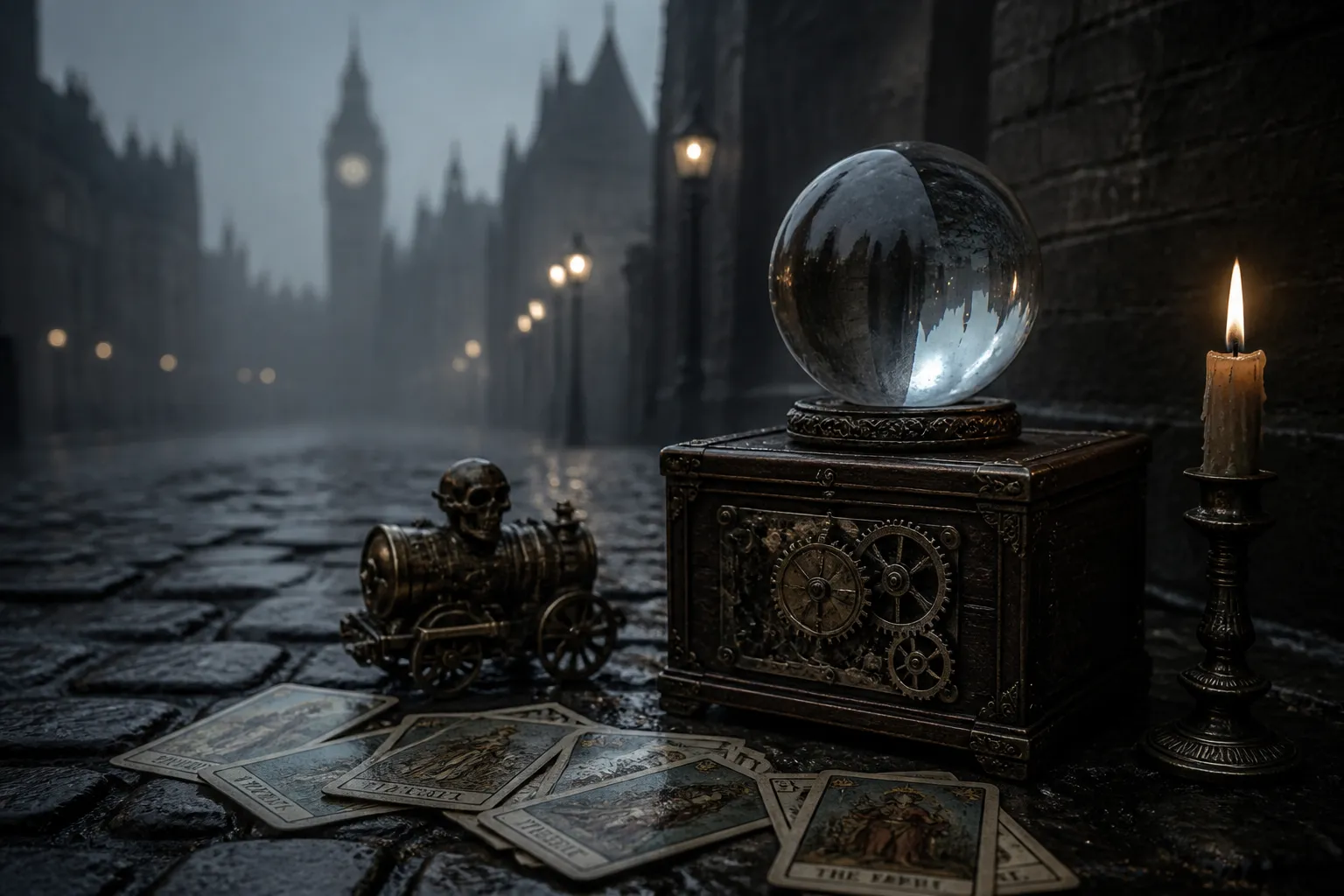
"Harbinger" spins a chilling tale from the United Kingdom that slipped into the U.S. digital arena on August 11 2026 via Miracle Media, following its UK debut on August 10 and a Blu‑ray release on August 24. The film follows Julia (Jeanine Nerissa Sothcott), the lone survivor of a serial killer, who is coaxed back into the very house where the murders unfolded for a paranormal television program hosted by Mike Craggs (Gary Webster). At the center of the story lies a painted fortune‑teller box, its coin slot a portal that, when activated, draws a card depicting the viewer’s own death.
The premise is simple yet unsettling: the house that once cradled a killer now houses a machine that contains the killer’s spirit. The machine is not a typical horror prop; it is a tangible object built on set, complete with a puppet inside that a crew member manipulates from beneath the box. Webster explained that the machine “had to be creepy enough to make you feel uneasy in its company” and “feels like the eighth cast member of the film.” The practical construction gives the object weight and a presence that CGI could not replicate.
Crow’s direction and the cast’s performances echo the theatricality of Hammer horror without emulating the 1960s Bray aesthetic. The film’s tone blends humor and terror, a combination Webster describes as a “technique rather than a tone.” He cites Alfred Hitchcock’s Frenzy as an example of a film that “lets a scene be silly, and then it opens somebody up.” The humor emerges from character reactions to supernatural pressure rather than from overt jokes aimed at the audience.
Sothcott discusses her approach to Julia’s trauma: “Some people might play it a lot more traumatic or a lot more big, but I was quite traumatized by the event and decided that I would play it down.” Her restrained performance lets tension accumulate over the course of the story. Webster’s Craggs is portrayed as a self‑promoting ghost hunter who uses the investigation for “a cathartic, a way for her to move on from this experience,” but ultimately seeks “down and dirty and as gory as he can” to satisfy viewers.
Production notes reveal that the film was shot quickly on a modest budget. The house used for the set was a real, old building that had been a hospital during the war and was reportedly haunted. The crew’s night shoots, including a five‑am attack sequence filmed in freezing weather, added to the film’s authenticity. Sothcott notes that the location “does an enormous amount of work in the finished film” and that the “real house” gives the film a feel that a soundstage could not provide.
The machine’s design and the film’s practical effects were deliberate choices. The fortune‑teller box is a “fairground attraction” that “knows exactly when you are going to die and takes your money to tell you.” The machine’s presence is described as a “malevolent object” that sits in the room, waiting for a coin. The film’s marketing emphasizes this object as the central element, and the machine’s physicality contributes to the horror’s credibility.
Harbinger’s release strategy reflects its independent status. Digital availability in the U.S. and U.K. markets, followed by a Blu‑ray release, allows the film to reach a broad audience without a theatrical run. The film’s limited budget is offset by high production values, practical effects, and a cast of familiar British character actors, including Carole Ann Ford and Peter Woodward.
In sum, Harbinger is a small‑budget British horror that leverages practical effects, a distinctive central object, and a blend of humor and fear to deliver a tense, atmospheric experience. The film’s release on digital platforms and Blu‑ray provides accessibility for horror fans looking for a fresh take on the occult‑horror genre.
The premise is simple yet unsettling: the house that once cradled a killer now houses a machine that contains the killer’s spirit. The machine is not a typical horror prop; it is a tangible object built on set, complete with a puppet inside that a crew member manipulates from beneath the box. Webster explained that the machine “had to be creepy enough to make you feel uneasy in its company” and “feels like the eighth cast member of the film.” The practical construction gives the object weight and a presence that CGI could not replicate.
Crow’s direction and the cast’s performances echo the theatricality of Hammer horror without emulating the 1960s Bray aesthetic. The film’s tone blends humor and terror, a combination Webster describes as a “technique rather than a tone.” He cites Alfred Hitchcock’s Frenzy as an example of a film that “lets a scene be silly, and then it opens somebody up.” The humor emerges from character reactions to supernatural pressure rather than from overt jokes aimed at the audience.
Sothcott discusses her approach to Julia’s trauma: “Some people might play it a lot more traumatic or a lot more big, but I was quite traumatized by the event and decided that I would play it down.” Her restrained performance lets tension accumulate over the course of the story. Webster’s Craggs is portrayed as a self‑promoting ghost hunter who uses the investigation for “a cathartic, a way for her to move on from this experience,” but ultimately seeks “down and dirty and as gory as he can” to satisfy viewers.
Production notes reveal that the film was shot quickly on a modest budget. The house used for the set was a real, old building that had been a hospital during the war and was reportedly haunted. The crew’s night shoots, including a five‑am attack sequence filmed in freezing weather, added to the film’s authenticity. Sothcott notes that the location “does an enormous amount of work in the finished film” and that the “real house” gives the film a feel that a soundstage could not provide.
The machine’s design and the film’s practical effects were deliberate choices. The fortune‑teller box is a “fairground attraction” that “knows exactly when you are going to die and takes your money to tell you.” The machine’s presence is described as a “malevolent object” that sits in the room, waiting for a coin. The film’s marketing emphasizes this object as the central element, and the machine’s physicality contributes to the horror’s credibility.
Harbinger’s release strategy reflects its independent status. Digital availability in the U.S. and U.K. markets, followed by a Blu‑ray release, allows the film to reach a broad audience without a theatrical run. The film’s limited budget is offset by high production values, practical effects, and a cast of familiar British character actors, including Carole Ann Ford and Peter Woodward.
In sum, Harbinger is a small‑budget British horror that leverages practical effects, a distinctive central object, and a blend of humor and fear to deliver a tense, atmospheric experience. The film’s release on digital platforms and Blu‑ray provides accessibility for horror fans looking for a fresh take on the occult‑horror genre.