Blab Entertainment
Emmy Ballot Reveals Surprising Casting, Writing, and Category Trends for 2026
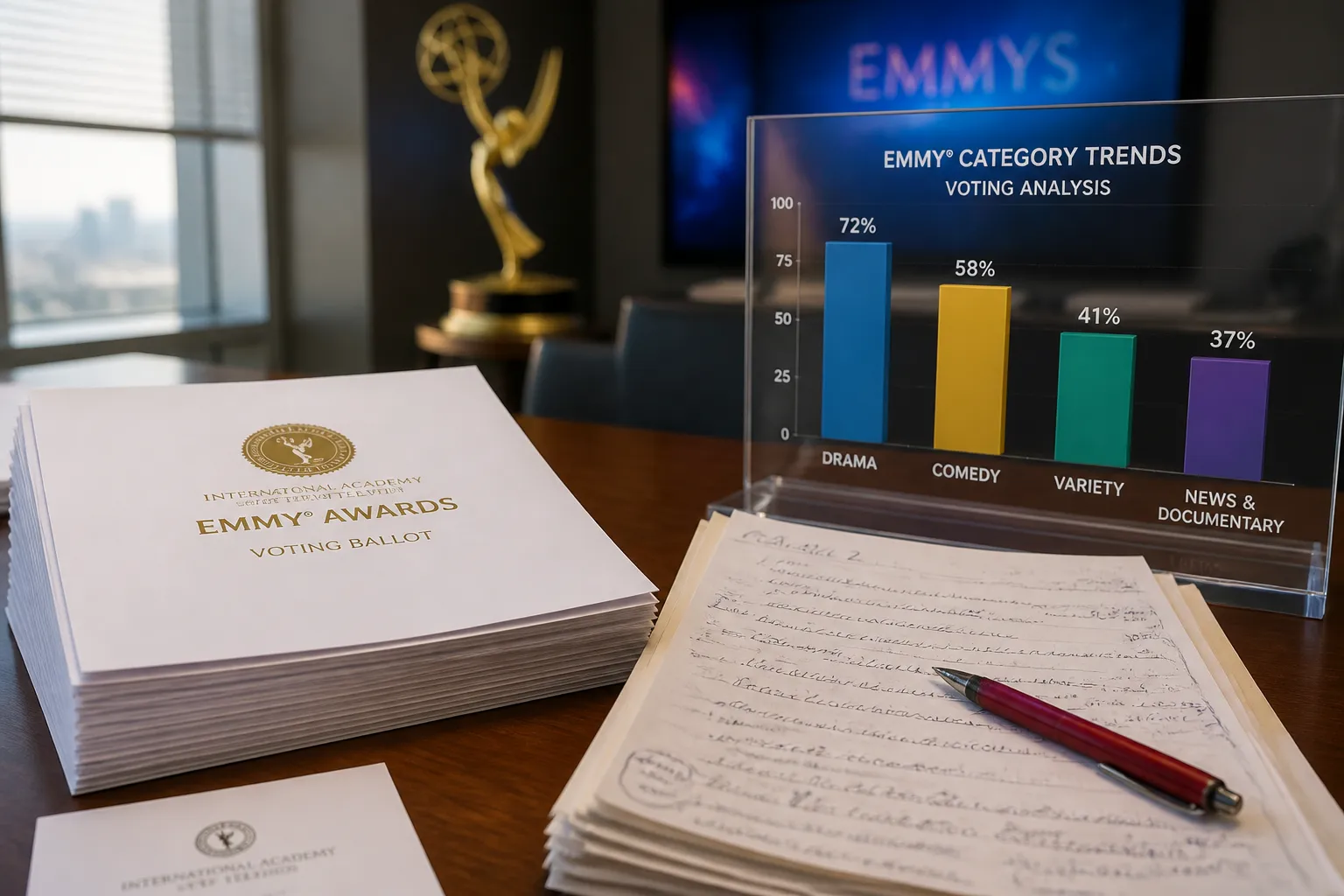
On June 11, the Television Academy released the complete 2026 Emmy nomination ballots, giving industry insiders and fans a detailed map of the shows and performers that will compete for the coveted statuettes. The documents list every eligible entry in each category and reveal a handful of unexpected patterns that shed light on how studios and creators are shaping their campaigns.
A standout discovery is the sheer breadth of The Pitt cast that has been submitted for acting nominations. The HBO Max medical drama, which premiered in January 2025 and returned for a second season in January 2026, has five actors listed in the Supporting Actor category and seven in Supporting Actress. All seven actresses are series regulars—Katherine LaNasa, Shabana Azeez, Isa Briones, Taylor Dearden, Fiona Dourif, Supriya Ganesh, and newcomer Sepideh Moafi—while the supporting‑actor slate includes regulars Patrick Ball and Gerran Howell alongside recurring performers Shawn Hatosy, Charles Baker, and Lucas Iverson. Notably absent are several recurring cast members who appeared in multiple episodes, such as Amielynn Abellera, Kristin Villanueva, Jalen Thomas Brooks, and Brandon Mendez Homer. A source close to the show confirmed that HBO submitted only series‑regular performers, a strategy designed to keep the vote pool focused on those with realistic chances of nomination.
Another headline‑making entry is Peacock’s reality‑competition series The Traitors in the Outstanding Writing for a Variety Series category. Historically dominated by scripted late‑night programs like Last Week Tonight with John Oliver, this category now includes a reality‑competition show, thanks to Academy rules that allow programs with an eligible writing credit to submit. The Traitors is one of 11 series on the ballot, competing against long‑running staples such as The Daily Show, Saturday Night Live, and The Late Show with Stephen Colbert. Its inclusion signals a growing recognition that scripted elements—host monologues, narrator voice‑overs, and staged challenges—constitute a form of writing that meets the Academy’s criteria.
The overall number of shows eligible for nomination has fallen for a third consecutive year. While comedies remain relatively stable—71 entries compared to 69 last year—dramas dropped from 126 to 110, and limited/anthology series fell from 44 to 31. The Emmy rules still require eight nominees in the Outstanding Drama Series and Outstanding Comedy Series categories, but the acting categories are capped by the number of submissions. With no category exceeding 80 submissions, all six lead‑acting categories will feature only five nominees. Supporting categories will have seven nominees, except for the limited/anthology categories, which will have six.
Submission strategy varies by genre. In the drama arena, shows such as The Pitt and Apple TV’s Pluribus submitted multiple episodes for writing and directing, maximizing their chances in those categories. In contrast, top comedies like Hacks and Widow’s Bay submitted a single episode each for writing and directing—a common approach that prevents vote splitting. Limited and anthology series face a different challenge: if a single writer or director is credited for the entire run, they can submit the whole series. HBO’s Half Man and DTF: St. Louis used this tactic, while shows with multiple writers, such as Beef and Love Story: John F. Kennedy Jr. & Carolyn Bessette, selected specific episodes.
Other categories highlighted in the ballots include Outstanding Music and Lyrics, a Creative Arts category that has attracted original songs from shows such as Only Murders in the Building and Wednesday. Genre classification also sparked discussion, with the Academy labeling Hulu’s All’s Fair as a comedy and HBO’s A Knight of the Seven Kingdoms as a drama, despite their differing episode lengths and tonal intentions.
In short, the 2026 Emmy ballots reveal a studio‑driven approach to nominations, with HBO Max and Peacock strategically selecting performers and episodes to maximize visibility. The inclusion of a reality‑competition series in a writing category signals an expanding definition of scripted content. With fewer eligible shows overall, the competition in lead‑acting categories will be tighter, while supporting categories remain robust. The upcoming 78th Primetime Emmy Awards, scheduled for September 14, 2026, will decide which of these contenders ultimately receive the coveted statuette.
A standout discovery is the sheer breadth of The Pitt cast that has been submitted for acting nominations. The HBO Max medical drama, which premiered in January 2025 and returned for a second season in January 2026, has five actors listed in the Supporting Actor category and seven in Supporting Actress. All seven actresses are series regulars—Katherine LaNasa, Shabana Azeez, Isa Briones, Taylor Dearden, Fiona Dourif, Supriya Ganesh, and newcomer Sepideh Moafi—while the supporting‑actor slate includes regulars Patrick Ball and Gerran Howell alongside recurring performers Shawn Hatosy, Charles Baker, and Lucas Iverson. Notably absent are several recurring cast members who appeared in multiple episodes, such as Amielynn Abellera, Kristin Villanueva, Jalen Thomas Brooks, and Brandon Mendez Homer. A source close to the show confirmed that HBO submitted only series‑regular performers, a strategy designed to keep the vote pool focused on those with realistic chances of nomination.
Another headline‑making entry is Peacock’s reality‑competition series The Traitors in the Outstanding Writing for a Variety Series category. Historically dominated by scripted late‑night programs like Last Week Tonight with John Oliver, this category now includes a reality‑competition show, thanks to Academy rules that allow programs with an eligible writing credit to submit. The Traitors is one of 11 series on the ballot, competing against long‑running staples such as The Daily Show, Saturday Night Live, and The Late Show with Stephen Colbert. Its inclusion signals a growing recognition that scripted elements—host monologues, narrator voice‑overs, and staged challenges—constitute a form of writing that meets the Academy’s criteria.
The overall number of shows eligible for nomination has fallen for a third consecutive year. While comedies remain relatively stable—71 entries compared to 69 last year—dramas dropped from 126 to 110, and limited/anthology series fell from 44 to 31. The Emmy rules still require eight nominees in the Outstanding Drama Series and Outstanding Comedy Series categories, but the acting categories are capped by the number of submissions. With no category exceeding 80 submissions, all six lead‑acting categories will feature only five nominees. Supporting categories will have seven nominees, except for the limited/anthology categories, which will have six.
Submission strategy varies by genre. In the drama arena, shows such as The Pitt and Apple TV’s Pluribus submitted multiple episodes for writing and directing, maximizing their chances in those categories. In contrast, top comedies like Hacks and Widow’s Bay submitted a single episode each for writing and directing—a common approach that prevents vote splitting. Limited and anthology series face a different challenge: if a single writer or director is credited for the entire run, they can submit the whole series. HBO’s Half Man and DTF: St. Louis used this tactic, while shows with multiple writers, such as Beef and Love Story: John F. Kennedy Jr. & Carolyn Bessette, selected specific episodes.
Other categories highlighted in the ballots include Outstanding Music and Lyrics, a Creative Arts category that has attracted original songs from shows such as Only Murders in the Building and Wednesday. Genre classification also sparked discussion, with the Academy labeling Hulu’s All’s Fair as a comedy and HBO’s A Knight of the Seven Kingdoms as a drama, despite their differing episode lengths and tonal intentions.
In short, the 2026 Emmy ballots reveal a studio‑driven approach to nominations, with HBO Max and Peacock strategically selecting performers and episodes to maximize visibility. The inclusion of a reality‑competition series in a writing category signals an expanding definition of scripted content. With fewer eligible shows overall, the competition in lead‑acting categories will be tighter, while supporting categories remain robust. The upcoming 78th Primetime Emmy Awards, scheduled for September 14, 2026, will decide which of these contenders ultimately receive the coveted statuette.