Blab Entertainment
Taiwanese Star Tino Bao Earns PhD in AI, Daughter Appears as Digital Avatar at Graduation
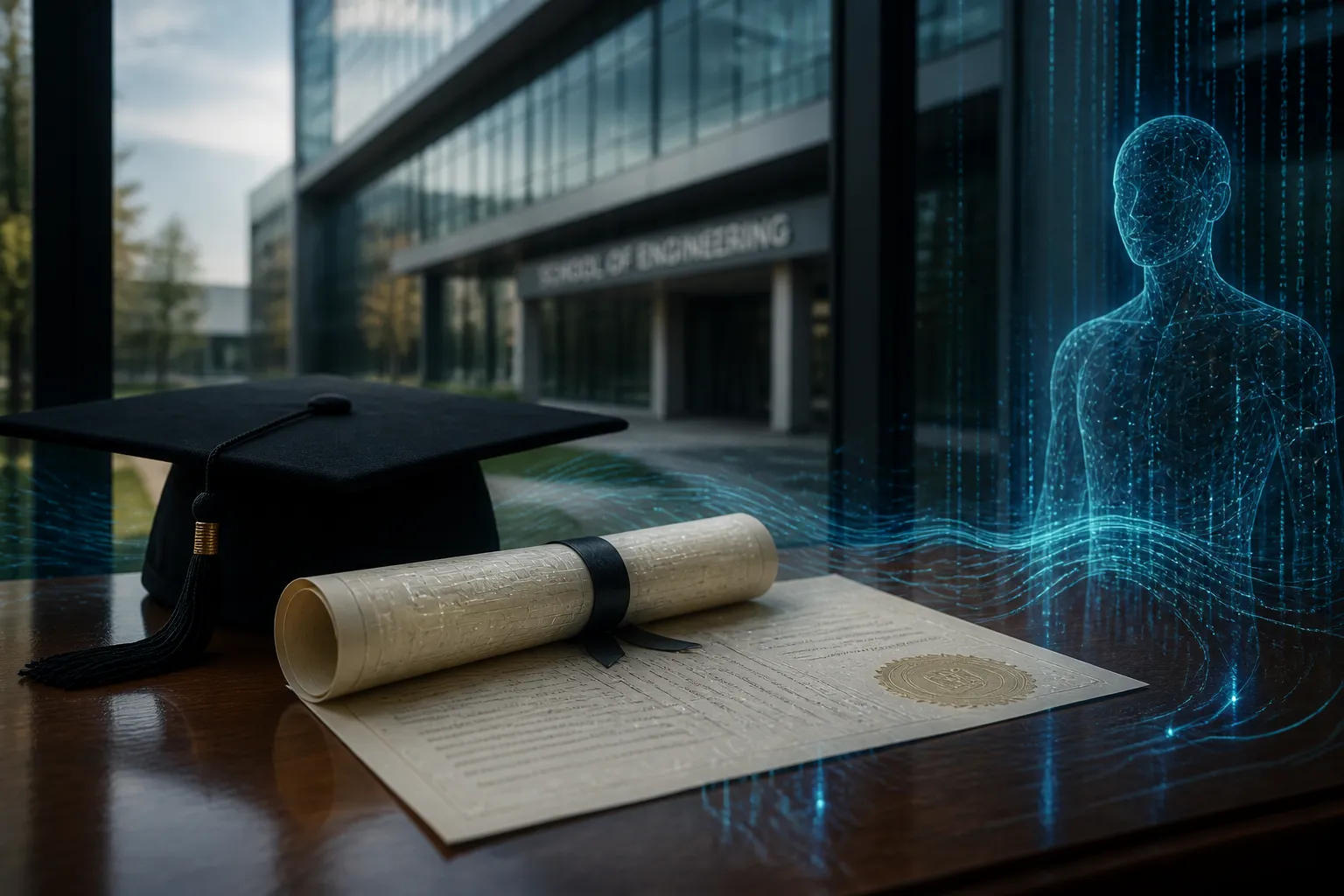
On June 13, 2026, Taiwanese star Tino Bao was awarded a PhD in artificial intelligence by National Taipei University of Technology, a ceremony that unfolded in the campus’s main auditorium. The event’s highlight was a striking, life‑like AI avatar of his late daughter Felicity, which materialized on stage to welcome the crowd and share a brief message.
Two days later, the 59‑year‑old posted a Facebook update summarizing the event. He highlighted the university principal’s request that he speak for all graduates as the ceremony’s most meaningful moment. In his speech, Bao thanked his wife and Felicity, declaring, “I would be letting my daughter down if I didn’t graduate with my doctorate… I will definitely stay by her side for the rest of my life.” A pre‑recorded video of the AI‑generated Felicity appeared on stage beforehand, remarking that the day was “not only my father’s graduation but also something much bigger than academic achievement.”
The graduation was the culmination of a series of public displays that started in 2024 when Bao posted a video of the AI Felicity singing a birthday tune for his wife. In that same month’s Facebook post, he explained that the avatar was crafted to honor Felicity, who died in 2021 at age 22 after battling a rare blood disease that inflicted “cruel treatment” for over two years.
A veteran of the entertainment industry, Bao’s résumé covers music, film, and production. He co‑founded Taiwan’s first idol group, Twin Star, with his twin brother Anthony in the 1980s. As a record producer, he has collaborated with artists such as Stefanie Sun, Jordan Chan, and Helen Su. His filmography lists Once Upon a Time in Tibet (2010), Eastern Bandits (2012), and Carpooling Shock (2013). Following Felicity’s death, he stepped back from show business to pursue a PhD in AI, beginning his studies in 2022.
National Taipei University of Technology, founded in 1912, is a public institution whose AI research program aligns with Taiwan’s national push to expand its artificial‑intelligence sector—a field that has flourished alongside the country’s semiconductor and ICT industries. The university’s website notes that the program emphasizes machine learning, data infrastructure, and applied AI services.
The deployment of AI avatars to embody deceased relatives has drawn broader scrutiny. In 2025, multiple technology companies unveiled applications enabling users to craft interactive digital replicas of lost family members. The technology sparks ethical debates over consent, memory preservation, and the risk of emotional exploitation. Bao’s public unveiling of Felicity’s avatar has been referenced in conversations about responsible AI use in memorial settings.
Industry observers point out that Bao’s graduation, coupled with the AI demonstration, exemplifies the growing fusion of entertainment and technology in Taiwan. With government backing and private investment, the country’s AI ecosystem is branching into creative domains—including music production, film post‑production, and digital performance.
At present, Bao has not revealed any forthcoming entertainment ventures. He continues to engage with the AI research community and has indicated a desire to apply his knowledge to future multimedia collaborations. The university intends to feature the AI avatar technology at upcoming academic conferences, while Bao is slated to speak at a Taipei Tech symposium on AI ethics later in the year.
The ceremony underscores how personal grief can intersect with technological innovation, spotlighting Taiwan’s expanding influence in crafting the next wave of AI‑driven creative tools.
Two days later, the 59‑year‑old posted a Facebook update summarizing the event. He highlighted the university principal’s request that he speak for all graduates as the ceremony’s most meaningful moment. In his speech, Bao thanked his wife and Felicity, declaring, “I would be letting my daughter down if I didn’t graduate with my doctorate… I will definitely stay by her side for the rest of my life.” A pre‑recorded video of the AI‑generated Felicity appeared on stage beforehand, remarking that the day was “not only my father’s graduation but also something much bigger than academic achievement.”
The graduation was the culmination of a series of public displays that started in 2024 when Bao posted a video of the AI Felicity singing a birthday tune for his wife. In that same month’s Facebook post, he explained that the avatar was crafted to honor Felicity, who died in 2021 at age 22 after battling a rare blood disease that inflicted “cruel treatment” for over two years.
A veteran of the entertainment industry, Bao’s résumé covers music, film, and production. He co‑founded Taiwan’s first idol group, Twin Star, with his twin brother Anthony in the 1980s. As a record producer, he has collaborated with artists such as Stefanie Sun, Jordan Chan, and Helen Su. His filmography lists Once Upon a Time in Tibet (2010), Eastern Bandits (2012), and Carpooling Shock (2013). Following Felicity’s death, he stepped back from show business to pursue a PhD in AI, beginning his studies in 2022.
National Taipei University of Technology, founded in 1912, is a public institution whose AI research program aligns with Taiwan’s national push to expand its artificial‑intelligence sector—a field that has flourished alongside the country’s semiconductor and ICT industries. The university’s website notes that the program emphasizes machine learning, data infrastructure, and applied AI services.
The deployment of AI avatars to embody deceased relatives has drawn broader scrutiny. In 2025, multiple technology companies unveiled applications enabling users to craft interactive digital replicas of lost family members. The technology sparks ethical debates over consent, memory preservation, and the risk of emotional exploitation. Bao’s public unveiling of Felicity’s avatar has been referenced in conversations about responsible AI use in memorial settings.
Industry observers point out that Bao’s graduation, coupled with the AI demonstration, exemplifies the growing fusion of entertainment and technology in Taiwan. With government backing and private investment, the country’s AI ecosystem is branching into creative domains—including music production, film post‑production, and digital performance.
At present, Bao has not revealed any forthcoming entertainment ventures. He continues to engage with the AI research community and has indicated a desire to apply his knowledge to future multimedia collaborations. The university intends to feature the AI avatar technology at upcoming academic conferences, while Bao is slated to speak at a Taipei Tech symposium on AI ethics later in the year.
The ceremony underscores how personal grief can intersect with technological innovation, spotlighting Taiwan’s expanding influence in crafting the next wave of AI‑driven creative tools.