Blab Entertainment
PBS Documentary Reexamines Philadelphias Black Founders in 250th Anniversary
A fresh PBS‑distributed film, Becoming American: A Philadelphia Story, invites viewers to rethink the pivotal role of Black Philadelphians in the birth of the United States. Executive‑produced and narrated by Oliver St. Clair Franklin, the documentary charts the lives of enslaved and free Black residents during the Revolutionary era while spotlighting Philadelphia’s rise as a cradle of abolition and early American democracy.
Premiering on PBS’s digital platform, the film will debut on Channel 12 on July 2. It is also slated for a special showing at the Philadelphia Film Society Center on Juneteenth at 11 a.m., followed by a Q&A with the filmmakers.
Franklin opens the narrative by recounting the arrival of the first enslaved Africans aboard the Isabella, many of whom were sold near 2nd and Market Streets. From there, the documentary traces the city’s transformation into a hub of abolitionist thought, noting that Pennsylvania was the first state to pass gradual abolition legislation in 1780. The law created a “space” in which free Black communities could grow, even as racism and inequality persisted.
Central to the story are the leaders of the Free African Society (FAS), founded in 1787 by Richard Allen and Absalom Jones. The FAS offered mutual aid, religious services, and a platform for civic engagement. James Forten, a free Black sailmaker and businessman, is highlighted for his activism and support of the abolition movement. The film shows how these men guided the Black community through the Yellow Fever epidemic of 1793, when many white Philadelphians fled the city while Black residents cared for the sick.
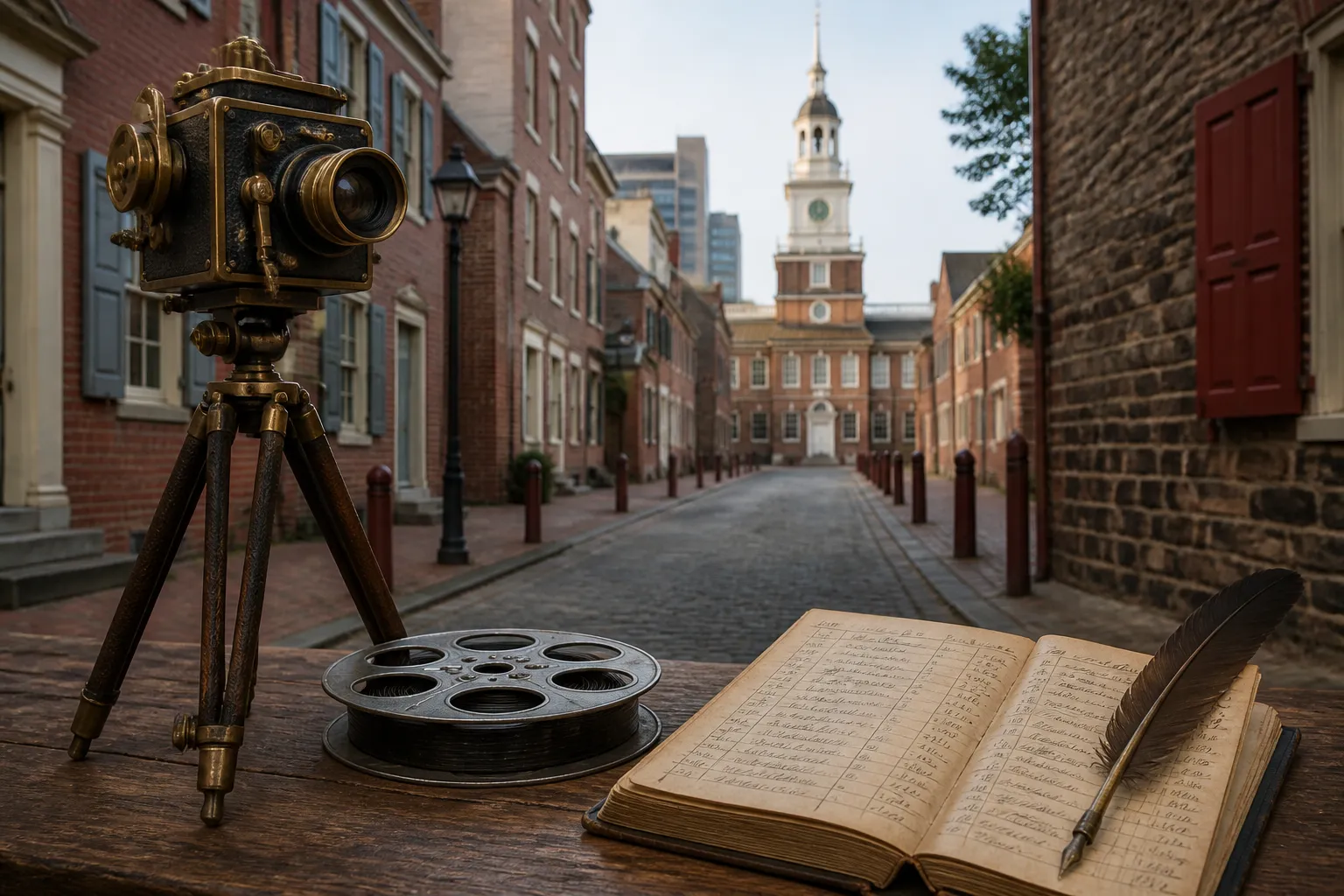
Franklin emphasizes that the documentary is not a distant historical study but a living narrative. Filming locations include Independence Hall, Mother Bethel AME Church, the American Philosophical Society, and historic Old City streets. In one scene, Franklin stands in the room where the Constitution was signed and places his hand on George Washington’s Rising Sun chair, noting that the chair was made from wood sourced in Jamaica and produced by enslaved Africans.
The film also explores the global link between the American Revolution and the Haitian Revolution. Franklin explains that Haiti’s successful slave uprising inspired free Black communities across the United States and intensified white fears of rebellion.
Music threads through the documentary, with composer Christopher Michael Stevens blending jazz, gospel, and classical elements to underscore the emotional weight of the historical moments. Local talent contributed to the production: students from the Community College of Philadelphia worked on sound design, while Moore College of Art students collaborated on visual elements with British editors.
Scholars such as Dr. Kelly Ranson Barnes and retired Haverford College professor Emma Lapsansky‑Werner provided research that shaped the film’s historical perspective.
Franklin argues that the resilience of Black Philadelphians during the founding era offers a powerful lesson for contemporary discussions about race, identity, and democracy. By reclaiming overlooked stories and placing Black Philadelphians at the center of America’s origin narrative, the documentary seeks to broaden viewers’ understanding of the nation’s complicated beginnings.
The film’s release coincides with the United States’ 250th anniversary, offering a timely reminder that the ideals celebrated in the founding documents were fought for by a diverse group of people, many of whom remain underrepresented in mainstream histories.
Becoming American: A Philadelphia Story will remain available on PBS’s digital property and will air periodically on PBS. The documentary’s premiere at the Philadelphia Film Society Center on Juneteenth provides an opportunity for the local community to engage directly with the film’s themes and the filmmakers’ reflections.
Premiering on PBS’s digital platform, the film will debut on Channel 12 on July 2. It is also slated for a special showing at the Philadelphia Film Society Center on Juneteenth at 11 a.m., followed by a Q&A with the filmmakers.
Franklin opens the narrative by recounting the arrival of the first enslaved Africans aboard the Isabella, many of whom were sold near 2nd and Market Streets. From there, the documentary traces the city’s transformation into a hub of abolitionist thought, noting that Pennsylvania was the first state to pass gradual abolition legislation in 1780. The law created a “space” in which free Black communities could grow, even as racism and inequality persisted.
Central to the story are the leaders of the Free African Society (FAS), founded in 1787 by Richard Allen and Absalom Jones. The FAS offered mutual aid, religious services, and a platform for civic engagement. James Forten, a free Black sailmaker and businessman, is highlighted for his activism and support of the abolition movement. The film shows how these men guided the Black community through the Yellow Fever epidemic of 1793, when many white Philadelphians fled the city while Black residents cared for the sick.
Franklin emphasizes that the documentary is not a distant historical study but a living narrative. Filming locations include Independence Hall, Mother Bethel AME Church, the American Philosophical Society, and historic Old City streets. In one scene, Franklin stands in the room where the Constitution was signed and places his hand on George Washington’s Rising Sun chair, noting that the chair was made from wood sourced in Jamaica and produced by enslaved Africans.
The film also explores the global link between the American Revolution and the Haitian Revolution. Franklin explains that Haiti’s successful slave uprising inspired free Black communities across the United States and intensified white fears of rebellion.
Music threads through the documentary, with composer Christopher Michael Stevens blending jazz, gospel, and classical elements to underscore the emotional weight of the historical moments. Local talent contributed to the production: students from the Community College of Philadelphia worked on sound design, while Moore College of Art students collaborated on visual elements with British editors.
Scholars such as Dr. Kelly Ranson Barnes and retired Haverford College professor Emma Lapsansky‑Werner provided research that shaped the film’s historical perspective.
Franklin argues that the resilience of Black Philadelphians during the founding era offers a powerful lesson for contemporary discussions about race, identity, and democracy. By reclaiming overlooked stories and placing Black Philadelphians at the center of America’s origin narrative, the documentary seeks to broaden viewers’ understanding of the nation’s complicated beginnings.
The film’s release coincides with the United States’ 250th anniversary, offering a timely reminder that the ideals celebrated in the founding documents were fought for by a diverse group of people, many of whom remain underrepresented in mainstream histories.
Becoming American: A Philadelphia Story will remain available on PBS’s digital property and will air periodically on PBS. The documentary’s premiere at the Philadelphia Film Society Center on Juneteenth provides an opportunity for the local community to engage directly with the film’s themes and the filmmakers’ reflections.