Blab Entertainment
1980s Cable Boom and the Oddball Appeal of Superman III
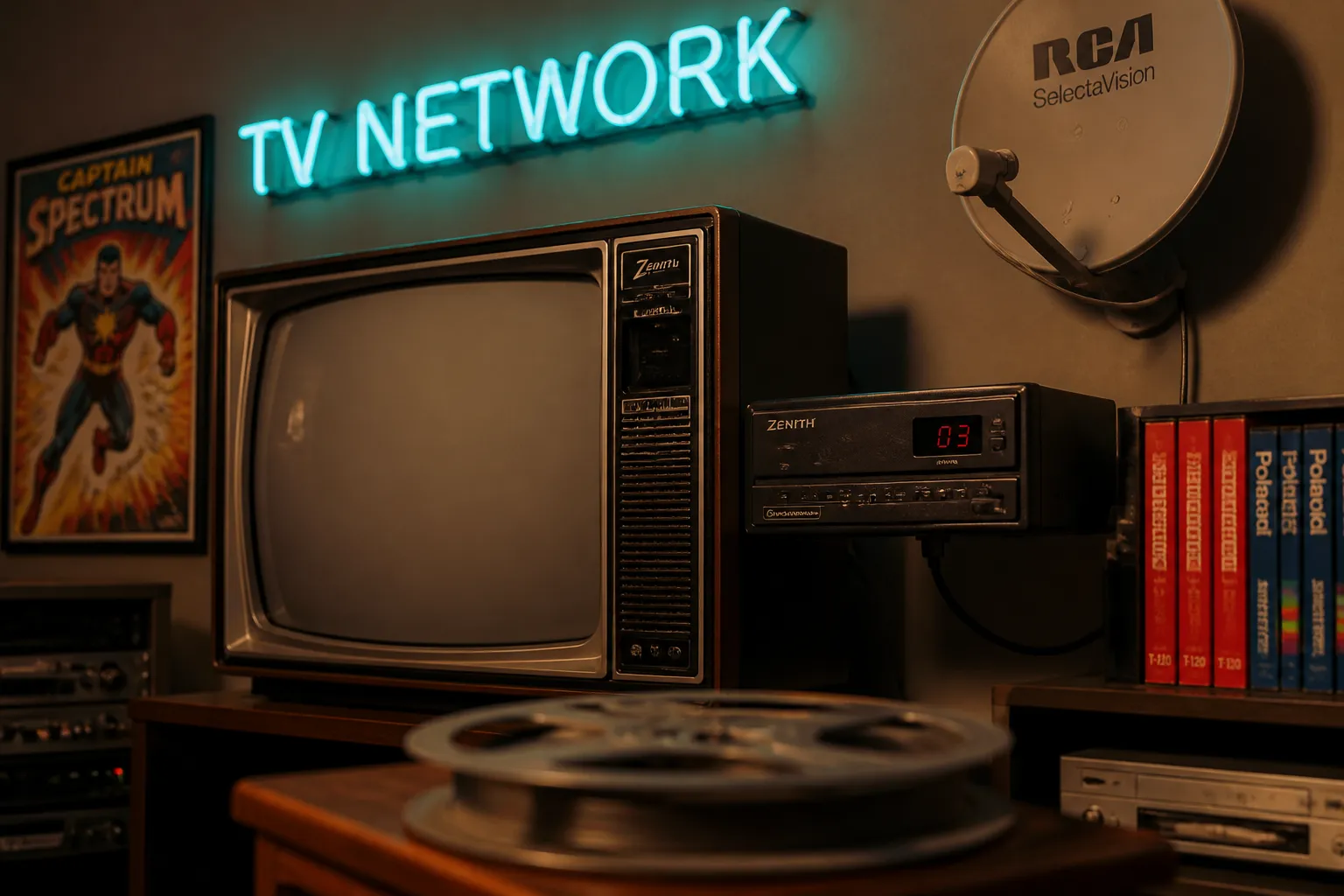
The 1980s were a decade of discovery for the average American: cable cable channels multiplied, and with them came a flood of programming that turned night‑time TV into a playground of the unconventional.
By 1988, 52.8 % of U.S. households boasted a cable subscription, a dramatic jump from the 7.5 % that had a signal in 1978. HBO, MTV, and Disney Channel opened new horizons, offering a 24‑hour stream of content that filled the gaps in the broadcast schedule. In the wake of that expansion, local affiliates began to occupy late‑night slots with inexpensive horror flicks, forgotten comedies, and foreign imports—movies that were often too niche for mainstream programming but perfect for a curious audience.
For many, including film student and writer Jimmy Palmquist, that eclectic mix forged a lifelong love for both classic cinema and the off‑beat. Palmquist, who earned an M.F.A. in Film and Video Production in Ohio, credits Cleveland legends Big Chuck & Lil’ John with introducing him to monster movies, exploitation flicks, and comedy sketches. He writes, “I love great films. I love Casablanca. I love Rear Window. I love Jaws.” He also says, “I love movies that are unapologetically stupid,” and notes that the oddballs he enjoyed were “unapologetically stupid.”
Superman III, released in 1983, exemplifies the era’s willingness to blend genres and experiment with technology. The plot revolves around a computer‑controlled villain—a narrative choice that mirrors the decade’s fascination with emerging digital tech. Critics have described the story as “paper‑thin” and noted that the opening sequence is a rapid chain of mishaps that feels more like a cartoon than a conventional film. Special effects were described as not state‑of‑the‑art by 1983 standards, and the villain Ross, played by Robert Vaughn, and his partner Vera Webster, portrayed by Annie Ross, were described as “gloriously ridiculous.”
Despite its shortcomings, the film contains elements that resonate with audiences and critics alike. Palmquist writes, “I love Kryptonite Superman.” He praises Christopher Reeve’s dual performance as Clark Kent and Superman, noting that Reeve “embodied everything the character should be. Kindness without weakness. Strength without arrogance. Optimism without naïveté.” The film also features Richard Pryor as Gus Gorman, a role that the author describes as “unapologetically stupid” but “warmth, humanity, and comedic timing.” The character Lorelei, played by Pamela Stephenson, is described as “sweet, beautiful, hilariously dim,” and the cyborg transformation of Vera Webster is noted as a “greatest final boss reveal of the 1980s.”
Palmquist’s reflection on Superman III illustrates a broader trend: the 1980s cable boom produced a generation of viewers comfortable with genre hybrids and experimental storytelling. The film’s mix of science‑fiction, comedy, and action, coupled with the era’s rapid technological changes, created a cultural artifact that continues to be revisited by film students and fans.
He concludes that “sometimes movies aren’t perfect, but they’re sincere. They swing for the fences with bizarre ideas. They reflect the anxieties and fascinations of their era. They surprise you. They scar you a little. They make absolutely no sense. They become part of your DNA because you discovered them at exactly the right age, usually at eleven o’clock at night while your parents thought you were asleep.”
By 1988, 52.8 % of U.S. households boasted a cable subscription, a dramatic jump from the 7.5 % that had a signal in 1978. HBO, MTV, and Disney Channel opened new horizons, offering a 24‑hour stream of content that filled the gaps in the broadcast schedule. In the wake of that expansion, local affiliates began to occupy late‑night slots with inexpensive horror flicks, forgotten comedies, and foreign imports—movies that were often too niche for mainstream programming but perfect for a curious audience.
For many, including film student and writer Jimmy Palmquist, that eclectic mix forged a lifelong love for both classic cinema and the off‑beat. Palmquist, who earned an M.F.A. in Film and Video Production in Ohio, credits Cleveland legends Big Chuck & Lil’ John with introducing him to monster movies, exploitation flicks, and comedy sketches. He writes, “I love great films. I love Casablanca. I love Rear Window. I love Jaws.” He also says, “I love movies that are unapologetically stupid,” and notes that the oddballs he enjoyed were “unapologetically stupid.”
Superman III, released in 1983, exemplifies the era’s willingness to blend genres and experiment with technology. The plot revolves around a computer‑controlled villain—a narrative choice that mirrors the decade’s fascination with emerging digital tech. Critics have described the story as “paper‑thin” and noted that the opening sequence is a rapid chain of mishaps that feels more like a cartoon than a conventional film. Special effects were described as not state‑of‑the‑art by 1983 standards, and the villain Ross, played by Robert Vaughn, and his partner Vera Webster, portrayed by Annie Ross, were described as “gloriously ridiculous.”
Despite its shortcomings, the film contains elements that resonate with audiences and critics alike. Palmquist writes, “I love Kryptonite Superman.” He praises Christopher Reeve’s dual performance as Clark Kent and Superman, noting that Reeve “embodied everything the character should be. Kindness without weakness. Strength without arrogance. Optimism without naïveté.” The film also features Richard Pryor as Gus Gorman, a role that the author describes as “unapologetically stupid” but “warmth, humanity, and comedic timing.” The character Lorelei, played by Pamela Stephenson, is described as “sweet, beautiful, hilariously dim,” and the cyborg transformation of Vera Webster is noted as a “greatest final boss reveal of the 1980s.”
Palmquist’s reflection on Superman III illustrates a broader trend: the 1980s cable boom produced a generation of viewers comfortable with genre hybrids and experimental storytelling. The film’s mix of science‑fiction, comedy, and action, coupled with the era’s rapid technological changes, created a cultural artifact that continues to be revisited by film students and fans.
He concludes that “sometimes movies aren’t perfect, but they’re sincere. They swing for the fences with bizarre ideas. They reflect the anxieties and fascinations of their era. They surprise you. They scar you a little. They make absolutely no sense. They become part of your DNA because you discovered them at exactly the right age, usually at eleven o’clock at night while your parents thought you were asleep.”